How a Metal Buoy Mold and a Beef Shortage Gave America Its Backyard
How a Metal Buoy Mold and a Beef Shortage Gave America Its Backyard
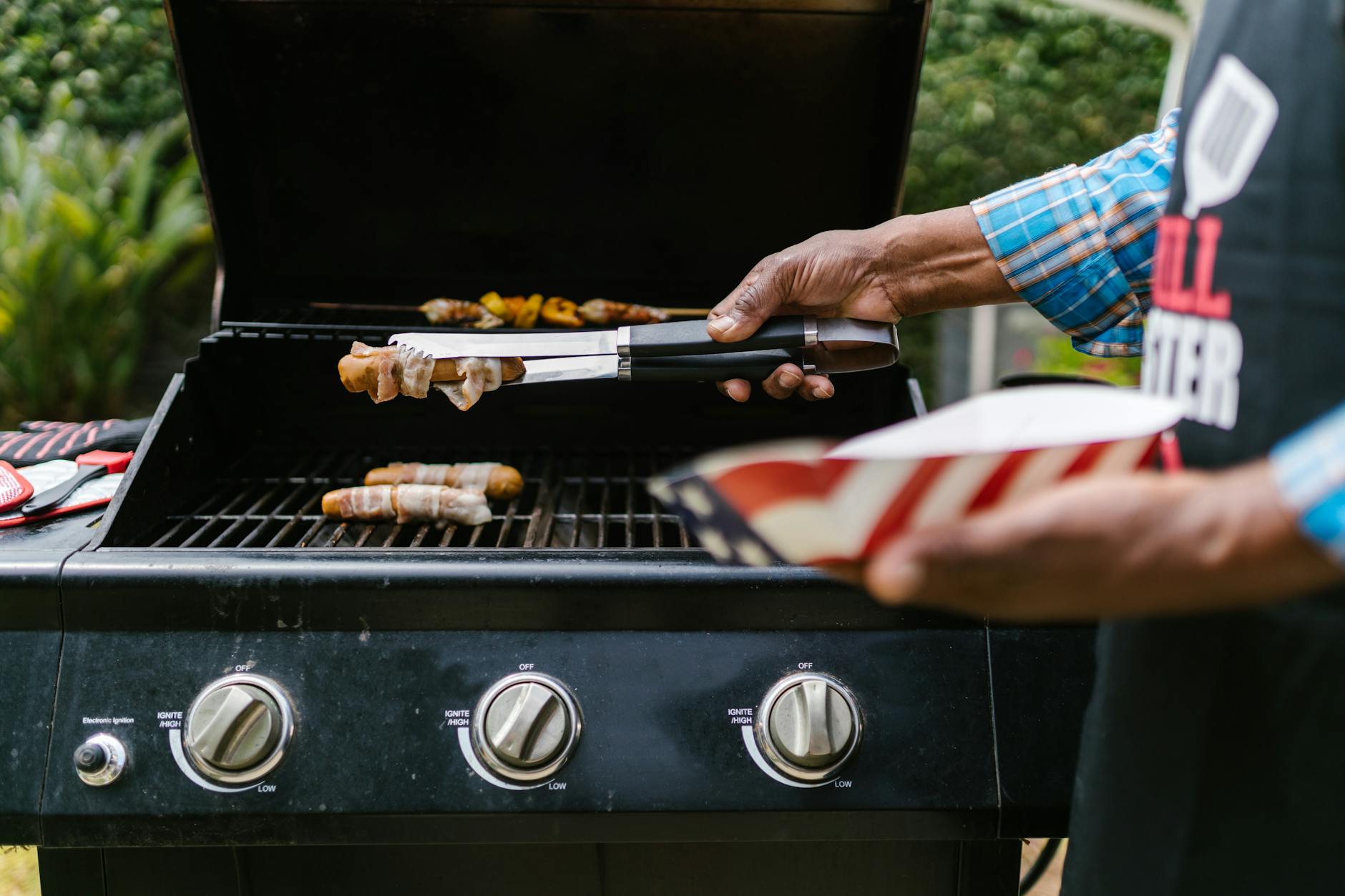
Close your eyes and picture summer in America. There's a decent chance a grill is somewhere in that image. Smoke rising over a suburban fence. Someone in an apron with a pair of tongs. The smell of charcoal. Kids running through a sprinkler nearby. It's one of the most deeply embedded pictures in American cultural life — the kind of scene that feels ancient, almost mythological.
It isn't, though. Not even close.
The backyard barbecue as Americans know it today is younger than the interstate highway system. It grew out of a specific, convergent set of circumstances — wartime scarcity, government surplus metal, the sudden explosion of suburban housing, and one man's willingness to look at a buoy manufacturing mold and see something completely different. Trace it back far enough, and the whole tradition has a birthday: 1952.
The War Changed What Americans Could Eat
To understand where the backyard barbecue came from, you have to start with what Americans were not eating during World War II.
Meat rationing went into effect in the United States in March 1943. The federal government, through the Office of Price Administration, allocated meat supplies to military use, which meant civilian access was sharply restricted. Beef, pork, and lamb were all rationed. Families received coupon books and had to plan meals carefully around what was available.
Working-class and rural communities — many of whom had already developed traditions of slow-cooking over open fire, particularly in the American South — adapted by turning to cheaper, tougher cuts of meat that weren't always subject to the same rationing pressures. Brisket, ribs, and pork shoulder required long, low-heat cooking to become edible. Communal pit cooking, which had deep roots in Southern Black culture and had spread through Appalachian and Texan communities for generations, became a practical solution to a practical problem.
This is important context: barbecue as a technique — slow cooking over indirect heat — is genuinely old and genuinely American, with roots that go back to Indigenous cooking methods and the African culinary traditions brought to the South through slavery. What changed after the war wasn't the technique. It was who was doing it, where, and with what equipment.
Veterans, Suburbs, and the Great Outdoor Migration
When American servicemen came home after 1945, they came home to a country that was building itself at an extraordinary pace. The GI Bill made homeownership accessible to millions of returning veterans. Developers like William Levitt were mass-producing entire neighborhoods in what had recently been farmland. Between 1945 and 1960, the American suburbs absorbed tens of millions of people.
Those new homes came with something previous generations of urban apartment dwellers had never had in any meaningful number: a backyard.
Veterans who had spent years eating communal meals, cooking in the field, and gathering around fire brought those instincts home with them. Outdoor cooking became a way to socialize in these new neighborhoods — a reason to invite the people next door over, a ritual that fit the new geometry of suburban life. It spread fast, partly because it was genuinely enjoyable and partly because postwar prosperity meant Americans had disposable income to spend on leisure for the first time in years.
The only problem was the equipment. Cooking outdoors in a suburban backyard wasn't quite the same as digging a pit in a field. People were improvising with whatever they had — bricks, old oil drums, open fire pits. There was no standard product for what everyone was starting to want to do.
The Man Who Looked at a Buoy and Saw a Grill
In 1952, a man named George Stephen was working at Weber Brothers Metal Works in Chicago, a company that manufactured, among other things, metal marine buoys. He was also an enthusiastic backyard cook who was frustrated with the flat, open braziers that passed for grills at the time — they were hard to control, prone to flare-ups, and surrendered completely to wind and weather.
Looking at the rounded metal buoy molds in the factory, Stephen had an idea. He cut a sphere in half, added legs to the bottom half, put a grate inside, and fitted the top half as a lid with a vent. The dome shape created a controlled cooking environment. Heat circulated. Flare-ups were containable. You could regulate temperature with the vents. You could cook in the rain.
He called it the kettle grill. His colleagues reportedly called it "Sputnik" and laughed at it.
They stopped laughing when it sold. Stephen eventually bought out Weber Brothers and built the company entirely around his design. The Weber kettle grill became the defining object of American backyard cooking — a product so well-conceived that its basic design has changed almost nothing in over 70 years.
Scarcity Made Something That Stuck
What makes this origin story worth tracing back is how clearly it illustrates the way American cultural rituals are often built from necessity rather than intention. Nobody planned the backyard barbecue. No marketing executive invented it. No government program created it.
It emerged from the gap between what people had — rationed meat, surplus metal, new houses with empty backyards — and what they wanted: community, comfort, and a reason to be outside together.
The charcoal industry boomed through the 1950s and 1960s. Manufacturers rushed to meet demand. Cookbooks dedicated to outdoor grilling multiplied. Brands like Kingsford, which had been selling charcoal since the 1920s as a byproduct of Ford Motor Company's wood-milling operations, found an enormous new market almost overnight.
By the time the American barbecue felt like a timeless tradition — which happened surprisingly quickly — almost no one remembered that it had been assembled from wartime leftovers and a factory worker's lunch-break idea.
Next time you fire up the grill this summer, that's the story underneath the smoke.