The Most Puritanical Breakfast in America Was Designed to Kill Your Sex Drive
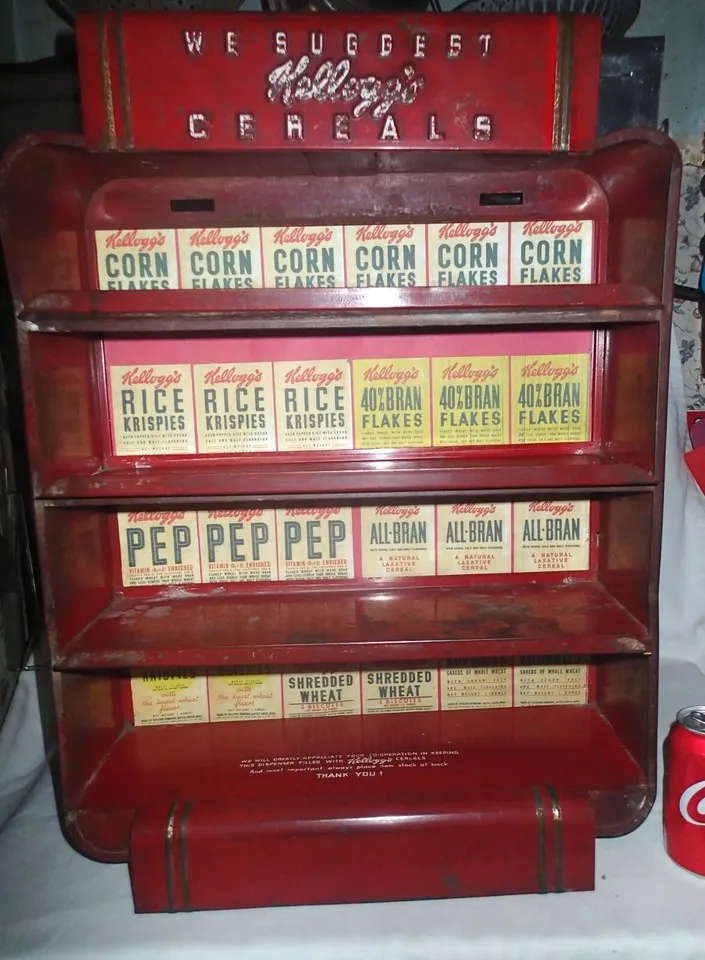
Photo: vintage 1900s cereal box breakfast table americana kitchen, via i.ebayimg.com
Picture a bowl of cornflakes. Yellow. Crunchy. Mildly sweet. Maybe you pour the milk first, maybe after — that's a whole other debate. Either way, it's one of the most inoffensive foods in existence. The kind of thing you eat when you're not really thinking about eating.
Now picture the man who invented it: a deeply religious physician who believed that bland food could suppress sinful thoughts, that spicy meals inflamed the passions, and that the greatest threat to American moral health in the late nineteenth century was what people did in private.
That man was Dr. John Harvey Kellogg. And the breakfast cereal sitting in your pantry right now was, in his mind, a public health intervention.
The Moral Panic Behind the Cereal Box
To understand what Kellogg was trying to do, you have to understand the cultural atmosphere of the 1870s and 1880s. The United States was in the grip of a serious anxiety about what physicians of the era called "self-abuse" — a euphemism for masturbation, which was widely believed by the medical establishment to cause everything from acne and blindness to epilepsy, insanity, and early death.
This wasn't fringe thinking. It was mainstream medicine. Doctors published books about it. Parents were warned about it. Institutions were built around preventing it.
Kellogg was a Seventh-day Adventist and the medical director of the Battle Creek Sanitarium in Michigan — a sprawling health resort that attracted wealthy patients from across the country. He was also a prolific writer and a genuine true believer in what he called "biologic living": the idea that the right diet, the right habits, and the right moral discipline could transform the human body and suppress its baser urges.
Central to his philosophy was the conviction that rich, flavorful food — meat, spices, alcohol — excited the nervous system and, by extension, the sexual appetite. If you wanted to live a pure life, you needed to eat a pure diet. Simple. Bland. Grain-based.
The Accidental Invention
In 1894, Kellogg and his brother Will Keith were working in the sanitarium kitchen, experimenting with grain-based foods to feed their patients. They were cooking wheat, trying to create a soft, digestible product, when they were called away and left the boiled grain sitting out. When they came back, the wheat had dried and gone slightly stale.
Instead of throwing it out, they ran it through the rollers anyway. Instead of producing a single flat sheet of dough, the dried grain broke apart into individual flakes. They toasted them, served them to patients, and discovered something unexpected: people liked them.
Kellogg patented the process in 1895 and began producing grain flakes — first wheat, then corn — as a sanitarium food product. He called them a "healthy, ready-to-eat anti-dyspeptic breakfast food," which was his way of saying: this will calm your body down.
The explicit goal was physiological suppression. Kellogg was so committed to this idea that he also advocated for other interventions far more extreme than breakfast cereal — interventions that modern readers would find deeply disturbing. The flakes were the gentlest part of his program.
When the Brother Ruined Everything
Here's where the story takes a turn that Kellogg himself never forgave.
Will Keith Kellogg — the younger, more commercially minded brother — saw what the sanitarium patients were responding to and recognized a business opportunity. If people liked the flakes, why not sell them to everyone? He started the Battle Creek Toasted Corn Flake Company in 1906, which eventually became the Kellogg Company we know today.
But to make the product sell at scale, Will made one critical change: he added sugar.
John Harvey was furious. The entire point of the cereal was that it was bland. Flavorless. Appetite-suppressing. Adding sugar didn't just change the taste — it undermined the whole moral architecture of the invention. A sweet cereal wasn't a tool of restraint. It was a pleasure food. It was exactly the kind of thing Kellogg had spent his career arguing against.
The brothers had a falling out that lasted the rest of their lives. Will built a cereal empire. John Harvey continued running his sanitarium, increasingly marginalized from the commercial product his kitchen had accidentally produced.
The Competition That Cornflakes Created
The commercial success of Kellogg's cereal triggered a wave of imitators that transformed American breakfast culture entirely.
C.W. Post, who had actually been a patient at the Battle Creek Sanitarium, left and started his own cereal company. Grape-Nuts appeared in 1897. Corn Flakes knockoffs flooded the market. By the early twentieth century, Battle Creek, Michigan had become a cereal boomtown with dozens of companies trying to cash in on the grain flake craze.
None of them were marketing their products as libido suppressants. They were selling health, convenience, and modernity. Breakfast cereal positioned itself as the forward-thinking alternative to the heavy, time-consuming morning meals that had defined American households — the eggs, the salt pork, the biscuits and gravy.
Cereal was fast. Cereal was light. Cereal was, the marketing implied, what a modern American ate.
What Got Left Behind
By the time cornflakes became a staple of the American pantry, the original reasoning behind them had been completely erased. Kellogg's moral framework, his anti-pleasure dietary philosophy, his beliefs about the relationship between food and sexual behavior — none of it survived the transition from sanitarium kitchen to grocery store shelf.
What survived was the flake. The bowl. The milk. The morning ritual.
Today, Kellogg's sells its corn flakes in 180 countries. The product has been endorsed by athletes, marketed to children with cartoon mascots, and positioned as everything from a weight-loss tool to a source of essential vitamins. The one thing nobody mentions is why the original inventor made it taste like almost nothing.
He wasn't going for subtle. He was going for suppression.
And the fact that you've probably eaten this cereal without ever knowing that is, genuinely, one of the stranger gaps in everyday food history.