The Lab Accident That Turned America Blue: How a Failed Chemistry Experiment Became Denim's Signature Color
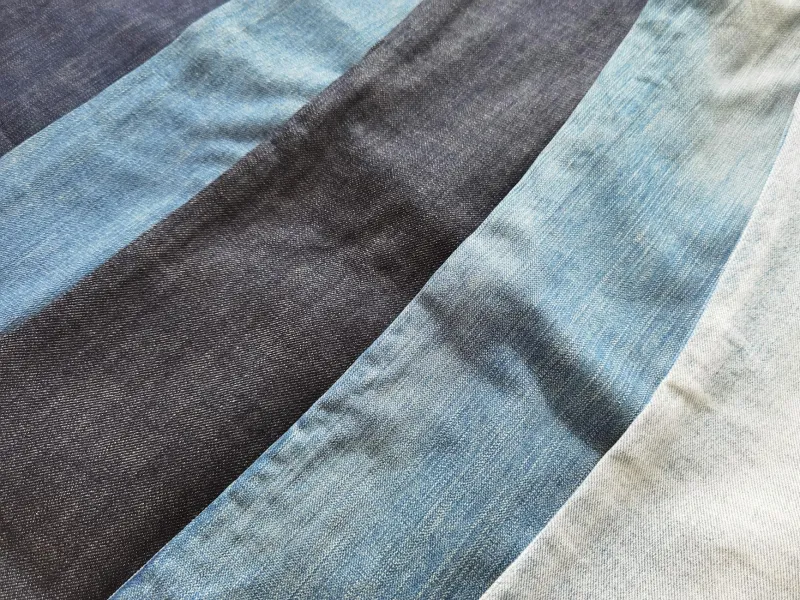
The Mistake That Changed Everything
In 1704, Johann Jacob Diesbach was having a terrible day in his Berlin laboratory. The German chemist was attempting to create a red pigment using cochineal insects, potash, and iron sulfate — a fairly standard recipe for the time. But his assistant had given him the wrong potash, one contaminated with animal blood and oil.
What should have been a deep crimson turned into something completely unexpected: a brilliant, intense blue unlike anything anyone had ever seen. Diesbach had accidentally created the world's first synthetic pigment, which would later be called Prussian blue.
He had no idea he'd just made the color that would eventually define American culture.
From Royal Courts to Gold Rush Camps
Prussian blue was revolutionary. Unlike natural blue dyes that faded quickly or cost a fortune (ultramarine blue was literally more expensive than gold), this synthetic version was both vibrant and relatively affordable. European artists went wild for it — you can see it in paintings by Hokusai, Gainsborough, and Van Gogh.
But the real transformation happened when this accidental blue crossed the Atlantic and met an ambitious Bavarian immigrant named Levi Strauss.
In 1853, Strauss was running a dry goods business in San Francisco, selling supplies to Gold Rush miners. The miners had a problem: their pants kept ripping apart under the brutal conditions of digging, hauling, and crawling through mines. When tailor Jacob Davis approached Strauss with an idea for reinforced work pants using metal rivets, they needed a fabric tough enough to match.
They chose denim — a sturdy cotton twill originally from Nîmes, France ("de Nîmes" became "denim"). And for the color? That accident from Diesbach's lab, now refined into indigo dye, provided the perfect solution.
Why Blue Won the West
The choice wasn't just aesthetic. Indigo-dyed fabric had practical advantages that made it ideal for the American frontier. The dye was colorfast enough to survive repeated washings in harsh conditions, but it also had a unique property: it sat on the surface of cotton fibers rather than penetrating them completely.
This meant the pants would fade gradually with wear and washing, creating a lived-in look that actually improved with age. What seemed like a flaw was actually a feature — these weren't fancy clothes that needed to stay pristine. They were work clothes that told the story of the person wearing them.
Cowboys, railroad workers, miners, and farmers all adopted the blue uniform. By the early 1900s, denim overalls and jeans had become synonymous with honest American labor.
The Rebel Uniform
For decades, blue jeans remained strictly working-class attire. Middle-class Americans wouldn't be caught dead in them outside of manual labor. That changed in the 1930s when Hollywood discovered denim.
Western movies romanticized cowboy culture, and suddenly those blue work pants became symbols of rugged individualism and frontier spirit. When Marlon Brando wore jeans in "The Wild One" (1953) and James Dean sported them in "Rebel Without a Cause" (1955), denim transformed from work uniform to rebellion uniform.
Schools banned jeans. Parents forbade them. Which, of course, only made teenagers want them more.
The Chemistry of Cool
Here's where Diesbach's accidental discovery becomes even more fascinating. The reason vintage jeans develop that coveted faded look isn't a design choice — it's pure chemistry.
Indigo molecules are relatively large and don't bond strongly with cotton fibers. Every time you wash jeans, tiny amounts of dye molecules break free and wash away. The areas that get the most stress — knees, thighs, pocket edges — lose dye faster, creating natural wear patterns.
Modern denim manufacturers have spent billions trying to artificially recreate this natural fading process. They use sandblasting, stone washing, acid treatments, and even lasers to mimic what happens naturally over months of wear. The imperfection that Diesbach accidentally created has become the most sought-after feature.
From Counterculture to Corporate Culture
By the 1960s, jeans had become the uniform of counterculture movements. Civil rights activists, anti-war protesters, and hippies all wore denim as a rejection of conservative dress codes. The same blue that once clothed miners now clothed revolutionaries.
Then something unexpected happened: the establishment embraced the rebellion. In the 1980s and 90s, "casual Friday" brought jeans into corporate offices. Premium denim brands emerged, selling $200+ jeans to the same executives who once banned them from their buildings.
Today, Americans buy over 450 million pairs of jeans annually. The average person owns seven pairs. That accidental blue from a German chemistry lab now generates over $90 billion in global sales each year.
The Enduring Power of an Accident
Walk down any American street, and you'll see Diesbach's mistake everywhere. From construction workers to tech CEOs, from teenagers to grandparents, that same blue dye — refined and perfected but essentially unchanged from the 1704 accident — colors the closest thing America has to a national uniform.
The irony is perfect: the most American piece of clothing gets its signature color from a German chemist's failed experiment, applied to French fabric, popularized by a Bavarian immigrant, and worn by people who mostly have no idea they're walking around in the results of a 300-year-old lab accident.
Every fade line, every worn spot, every perfectly imperfect pair of jeans carries the DNA of that moment when Johann Jacob Diesbach mixed the wrong ingredients and accidentally created the color of American culture. Sometimes the best discoveries happen when everything goes wrong.