The Moldy Petri Dish That Changed Medicine Forever
The Moldy Petri Dish That Changed Medicine Forever
There's a good chance you've taken a course of antibiotics at some point in your life — for strep throat, a skin infection, maybe a stubborn sinus bug that wouldn't quit. You picked up the prescription, followed the instructions, and didn't think much of it. Why would you? Antibiotics are everywhere. They're routine.
But here's what most people never stop to consider: we almost didn't have them at all.
The story of penicillin doesn't begin in a cutting-edge lab with white-coated scientists working toward a predetermined goal. It begins with a messy workbench, a forgotten petri dish, and a Scottish bacteriologist who was, by most accounts, not the tidiest researcher in London.
The Lab That Nobody Cleaned Up
Alexander Fleming had a reputation at St. Mary's Hospital in London. He was brilliant, unconventional, and notoriously careless about keeping his workspace in order. In the summer of 1928, he left for a two-week vacation without properly cleaning his lab — something his colleagues apparently found entirely on-brand.
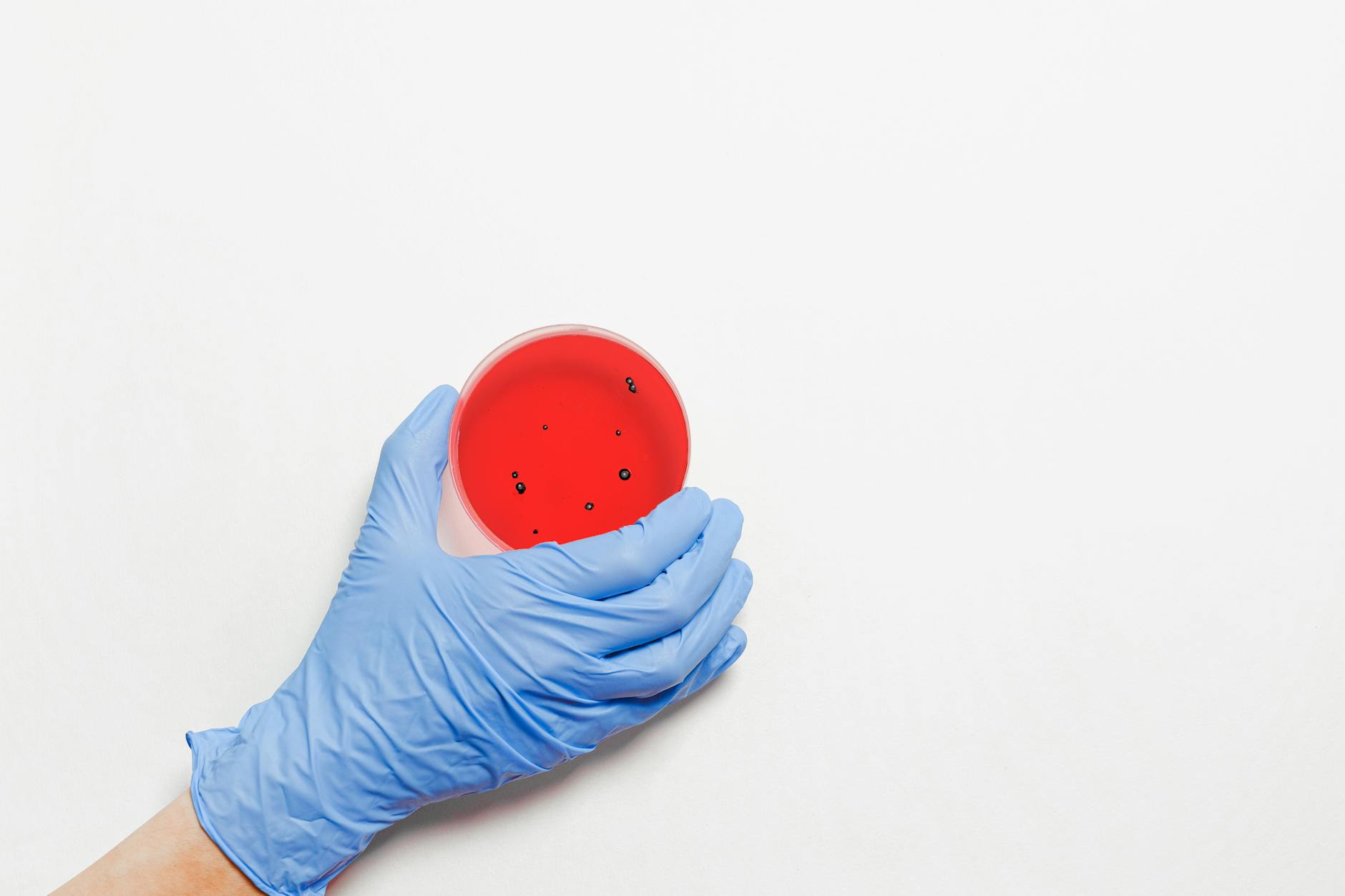
When he returned in early September, he found a stack of petri dishes he'd been using to culture Staphylococcus bacteria. Most were unremarkable. One was not.
A bluish-green mold had contaminated one of the dishes — the kind of thing that would typically send a researcher straight to the trash can. But Fleming paused. The mold, later identified as Penicillium notatum, had done something strange: the bacteria around it were dead. Not just slowed down. Dissolved. Whatever the mold was producing, it was killing the very thing Fleming had been studying.
He reportedly held the dish up and said, quietly, "That's funny."
That might be the most understated reaction to a world-changing discovery in recorded history.
How Close We Came to Missing It Entirely
Fleming published his findings in 1929, describing the mold's antibacterial properties and coining the term penicillin for the substance it produced. And then — almost nothing happened.
He struggled to isolate penicillin in a stable, usable form. The chemistry was beyond what his lab could manage at the time, and without a reliable way to produce it consistently, the medical establishment largely moved on. Fleming himself shifted his focus to other projects. For more than a decade, penicillin sat in scientific literature like a promising lead that nobody followed up on.
This is the part of the story that tends to get glossed over. The discovery happened in 1928. The drug didn't reach patients in any meaningful way until the early 1940s. Twelve years of potential life-saving treatment, essentially dormant.
What changed everything was a war.
World War II and the Race to Scale Up
By 1939, with Europe at war and the United States watching anxiously from the sidelines, two Oxford researchers — Howard Florey and Ernst Boris Chain — picked up where Fleming had left off. They developed a method to purify and concentrate penicillin, and their early trials were extraordinary. Soldiers who would have died from infected wounds were recovering. Diseases that had been near-certain death sentences were becoming treatable.
The U.S. government, recognizing what they had, threw enormous resources behind mass production. American pharmaceutical companies — including Pfizer, which at the time was primarily a chemical manufacturer — figured out how to produce penicillin in industrial quantities through a fermentation process. By D-Day in June 1944, the Allies had enough penicillin to treat every wounded soldier who needed it.
Estimates suggest penicillin saved somewhere between 80 and 200 million lives over the course of the 20th century. The range is wide, but even the lower number is staggering.
Fleming, Florey, and Chain shared the Nobel Prize in Physiology or Medicine in 1945. Fleming, ever modest, was careful to note in his acceptance speech that the real credit belonged to the mold.
What a Messy Lab Taught Us About Discovery
There's a version of this story where Fleming cleans up before his vacation. Where the contaminated dish gets thrown out without a second glance. Where penicillin isn't discovered until years later — or perhaps by someone else entirely, under completely different circumstances.
That version of history is genuinely unsettling to sit with. The infections that were routine killers in the pre-antibiotic era — strep, pneumonia, tuberculosis, sepsis from a small wound — shaped the average human lifespan in ways we've almost entirely forgotten. As recently as the 1920s, a scratch that got infected could kill you.
Fleming's discovery didn't just produce a drug. It cracked open an entirely new understanding of how bacteria could be fought, inspiring generations of researchers to develop the broad family of antibiotics that now line pharmacy shelves across the country.
So the next time you finish a course of amoxicillin for an ear infection and barely think twice about it — maybe think once. Think about a cluttered lab in London, a researcher who didn't clean up after himself, and a patch of mold that, against all odds, somebody actually stopped to look at.
Ordinary medicine. Extraordinary origin.