The Two-Letter Word Americans Say All Day — and Its Truly Bizarre Origin
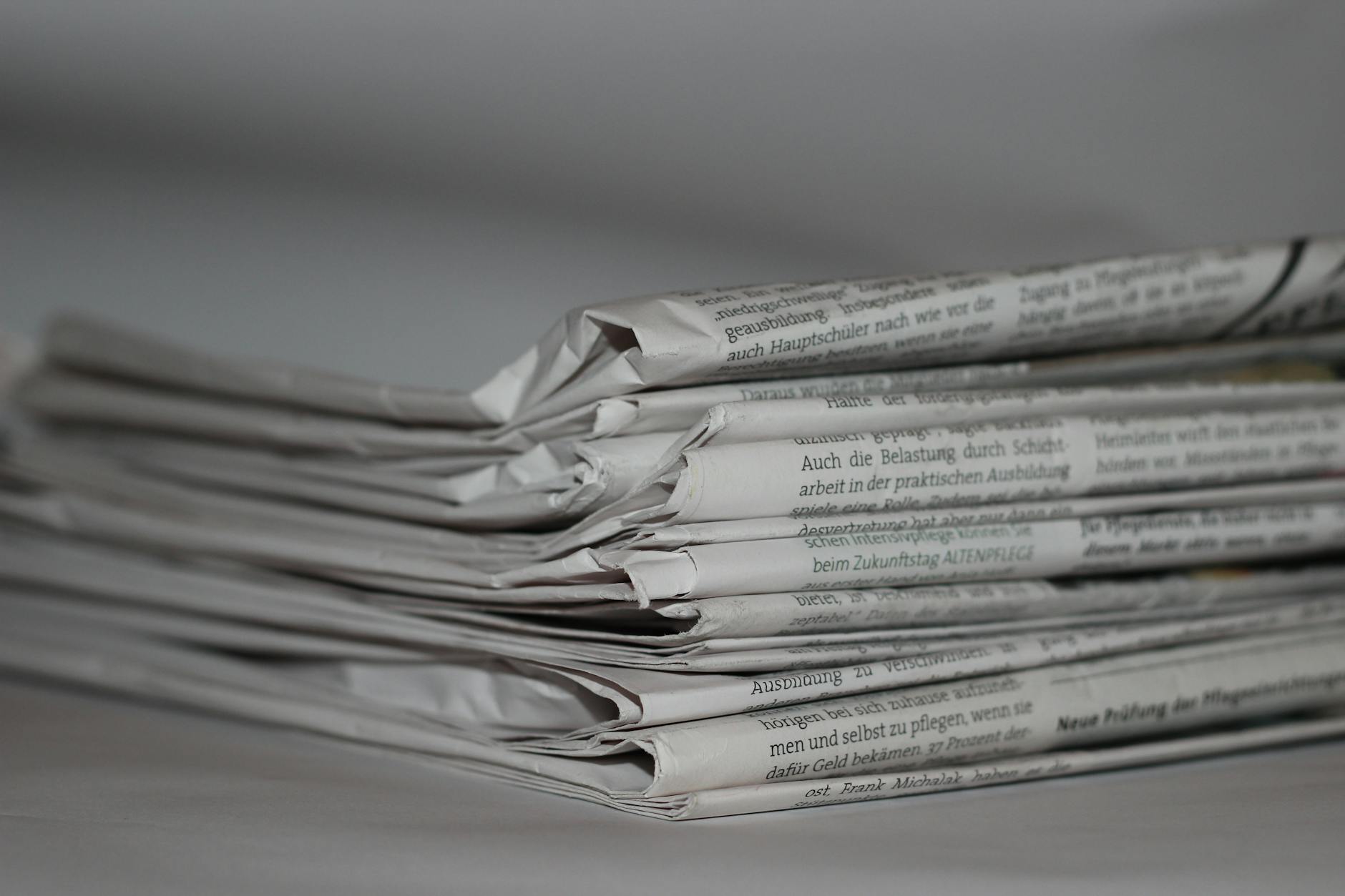
The Two-Letter Word Americans Say All Day — and Its Truly Bizarre Origin
At some point today, you said it. Maybe you typed it. Maybe you texted it as a single lowercase letter with a period. "OK." "Ok." "Okay." It came out without a second thought, the way breathing does. It confirmed something, wrapped something up, expressed agreement or resignation or mild enthusiasm depending on the tone.
"OK" is the most frequently spoken expression in the English language. Linguists have called it the most recognized word on earth. It has been adopted into hundreds of languages, often without translation, because no equivalent exists that works quite as efficiently. And yet if you asked most Americans where it came from, you'd get a shrug.
The real origin is so strange, so specific, and so dependent on a chain of unlikely coincidences that it almost defies belief.
The Theories You've Probably Heard
Before getting to the answer that historians largely agree on, it's worth acknowledging that "OK" has attracted more origin theories than almost any other word in American English — which is itself a clue to how genuinely mysterious it seemed for a long time.
Some people have traced it to the Choctaw word okeh, meaning "it is so," and argued that Andrew Jackson picked it up during his military campaigns in the South. Others have pointed to the West African word waw-kay, used in certain languages to signal agreement, suggesting it may have traveled to America through enslaved people. There are Greek theories (ola kala, meaning "all is good"), Scottish theories (och aye), and a persistent folk legend involving a quality-control stamp reading "0 Kills" — meaning zero defects — that was supposedly used in biscuit manufacturing.
None of these have held up under serious linguistic scrutiny. They're good stories. They're just not the story.
A Boston Newspaper and a Very Bad Joke
In the spring of 1839, a writer at the Boston Morning Post published a short, throwaway piece of satirical humor built around a popular comedic trend of the day: deliberate misspelling.
Abbreviations were fashionable in American newspapers and casual correspondence throughout the 1830s. Writers would take common phrases and shorten them, sometimes ironically misspelling the words first for comic effect. "No go" became "K.G." (for "know go"). "All right" became "O.W." (for "oll wright"). It was the kind of insider humor that worked in print culture the way a certain type of internet joke works now — absurd, self-aware, and slightly exhausting if you weren't in on it.
On March 23, 1839, the Boston Morning Post printed "O.K." — standing for "oll korrect," a jokey misspelling of "all correct." It was not the first time abbreviations like this had appeared. But it was, as far as researchers have been able to determine, the first documented appearance of those specific two letters in print.
The phrase might have vanished entirely — a footnote in the history of bad newspaper jokes — if not for what happened the following year.
The Presidential Campaign That Made It Stick
In 1840, President Martin Van Buren was running for re-election. Van Buren had been born in Kinderhook, New York, and his political supporters organized a club in his honor called the Old Kinderhook Club. Their rallying shorthand? "O.K."
The timing was perfect. The abbreviation had just been circulating in Boston newspaper culture, and now it had a political identity — "OK" meant you were a Van Buren man. His opponents, sensing an opportunity, tried to weaponize it by claiming "OK" actually stood for "orful korrect" — a dig at Van Buren's supposed illiteracy. The attack didn't stick, but the word did.
Van Buren lost the election. But "OK" — boosted by the national reach of a presidential campaign and printed thousands of times across newspapers from New England to the frontier — had achieved something rare: it had escaped its original context entirely and taken on a life of its own.
By the 1840s and 1850s, it was appearing in everyday correspondence, telegrams, and conversation. The telegraph, in particular, helped cement it — operators loved short confirmations, and "OK" was about as short as it got.
How a Local Joke Went Global
The 20th century did the rest. American movies, music, military presence abroad, and eventually the internet carried "OK" into virtually every corner of the world. It appears in Japanese, Arabic, Portuguese, French, and Swahili. It shows up in the mouths of people who speak no English otherwise. It has become what linguists call a "loan word" in dozens of languages — except that, unlike most loan words, it was never really a word to begin with. It was a joke abbreviation of a deliberately misspelled phrase, printed once in a Boston newspaper by someone who probably never imagined anyone outside the city would read it.
Allan Metcalf, a linguist who wrote an entire book on the subject, has called "OK" the greatest word America ever gave the world. That feels right. Not because it's beautiful or precise, but because it is so perfectly, accidentally American — born from humor, shaped by politics, spread by technology, and ultimately too useful for anyone to stop saying.
You'll probably use it again before the day is out. Now at least you'll know where it came from.