When Nobody Wanted His Gas Station Idea — Then It Built America's Highway Culture
The Patent Nobody Wanted
In 1905, a Cleveland inventor named Harold Whitman walked into yet another city planning office, clutching a worn leather portfolio containing what he believed was his ticket to fortune. Inside were detailed blueprints for a "Roadside Petroleum Distribution System" — essentially a network of standardized fuel containers stationed along America's dusty country roads.
The response was always the same: polite smiles, shuffled papers, and a firm "no thank you."
City planners couldn't see the point. After all, in 1905, there were fewer than 80,000 automobiles in the entire United States. Most people still traveled by horse, train, or on foot. The idea of needing fuel stations scattered across the countryside seemed absurd — like building lighthouses in the desert.
But Whitman's rejected patent would accidentally spark a revolution that transformed how Americans think about travel, freedom, and the open road.
The Desperate Improvisation That Changed Everything
With his official patent applications gathering dust, Whitman decided to build his system anyway — on a shoestring budget and without permission. He convinced a handful of general store owners and blacksmiths along Ohio's country roads to let him place crude fuel containers on their property.
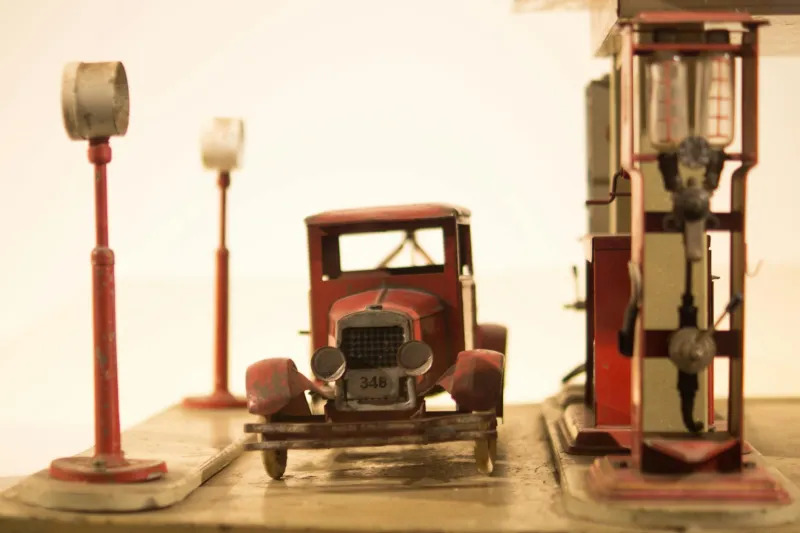
The setup was laughably simple: repurposed oil drums with hand-pumped dispensers, often sitting next to chicken coops and vegetable gardens. Whitman painted each container bright red and stenciled "MOTOR FUEL" in block letters. Store owners would sell the gasoline as a side business, keeping a percentage of each sale.
It wasn't glamorous, but it worked.
When Henry Ford Changed the Game
Whitman's timing, though accidental, was perfect. In 1908, Henry Ford introduced the Model T — affordable, reliable, and suddenly everywhere. Americans who had never considered owning an automobile found themselves behind the wheel, eager to explore beyond their hometown limits.
But there was a problem: gasoline was still sold primarily at pharmacies and general stores in cities. Venture too far into the countryside, and you'd find yourself stranded with an empty tank and no way to refuel.
Whitman's crude network of roadside fuel stops suddenly became invaluable. Word spread among early motorists about the red containers scattered across Ohio. Soon, store owners in other states began reaching out, begging Whitman to install his system on their property.
The Accidental Architecture of American Freedom
What happened next was entirely unplanned. As Whitman's fuel stops multiplied, they began attracting more than just desperate motorists. Store owners started expanding their services — adding air pumps for tires, basic repair tools, maps, and snacks for travelers.
These improvised rest stops became social hubs where strangers shared road conditions, recommended routes, and swapped stories about their adventures. The simple act of refueling transformed into a ritual of American travel culture.
By 1915, Whitman's rejected patent had inspired thousands of imitators. Entrepreneurs across the country were building their own versions of roadside fuel stops, each trying to attract motorists with bigger signs, cleaner facilities, and better service.
From Fuel Stops to Cultural Icons
The gas station evolved rapidly from Whitman's basic fuel containers. In the 1920s, companies like Texaco and Shell began standardizing their stations with recognizable architecture and branding. The simple fuel stop became a carefully designed experience, complete with uniformed attendants, spotless restrooms, and detailed road maps.
These stations didn't just sell gasoline — they sold the promise of adventure. Their maps highlighted scenic routes, roadside attractions, and distant destinations that suddenly seemed within reach. The gas station became the launching pad for the American road trip.
The Infrastructure of Wanderlust
Without realizing it, Whitman had created more than a business model — he'd built the infrastructure that made American car culture possible. His network of fuel stops removed the biggest barrier to long-distance automobile travel: the fear of running out of gas in the middle of nowhere.
This infrastructure enabled everything from family vacations to Route 66 to the massive interstate highway system. The gas station became so fundamental to American life that we barely notice it — until we're running on empty in an unfamiliar town.
The Legacy of a Laughed-Off Idea
Today, there are over 150,000 gas stations across the United States. They're so embedded in American culture that we can't imagine road trips without them. Every cross-country adventure, every weekend getaway, every daily commute depends on the network that grew from Harold Whitman's rejected patent.
The irony is delicious: city planners who couldn't see the point of roadside fuel stops in 1905 were looking at the foundation of American mobility culture. Whitman's "useless" invention accidentally created the infrastructure that would define how Americans think about freedom, exploration, and the open road.
Sometimes the best ideas are the ones nobody wants — until everybody needs them.