It Was Never About Safety — The Real Reason Americans Drive on the Right
It Was Never About Safety — The Real Reason Americans Drive on the Right
You've done it thousands of times. You slide into the driver's seat, pull out of the driveway, and drift to the right side of the road without a single conscious thought. It feels obvious. Natural. Like there couldn't possibly be another way.
Except for about 35% of the world's population, there is. And the reason Americans ended up on the right — while the British, Australians, Japanese, and dozens of other countries stayed on the left — comes down to something almost embarrassingly specific: the way Pennsylvania farmers sat on their horses in the 1700s.
The Wagon That Started Everything
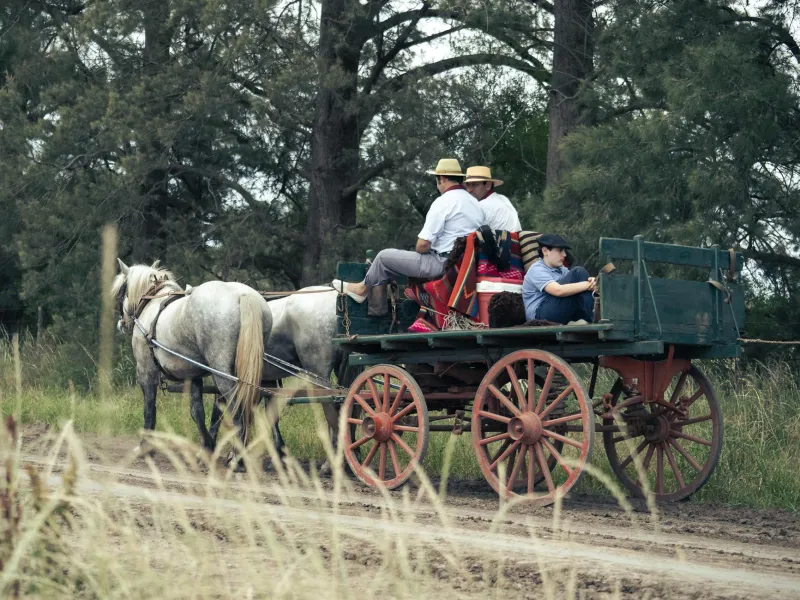
Before highways, before cars, before the interstate system that stitched the country together, there were Conestoga wagons. These massive freight haulers — named after Pennsylvania's Conestoga Valley — were the eighteen-wheelers of the colonial era. They could carry up to six tons of goods and were pulled by teams of four to six horses.
Here's the thing: Conestoga wagons didn't have a driver's seat. There was no bench up front, no cab, no cushioned perch. If you were hauling freight, you either walked alongside the team or you rode the rear-left horse — the last horse on the left side of the team — so you could control the others with a whip held in your right hand.
That single seating choice had enormous consequences.
When two wagons approached each other on a narrow road, the driver instinctively steered to the right. Why? Because sitting on the left rear horse, you needed to keep oncoming traffic on your left side — that way you could see the full width of your wagon and make sure the wheels didn't clip. Drifting right wasn't a rule. It was just the most sensible thing to do given where your body was sitting.
Do that enough times, across enough roads, with enough wagons, and you get a habit. Do it across an entire region for decades, and you get an informal standard.
The Politics of Switching Sides
The British had long favored the left. Historians believe this dated back to medieval road customs — most people are right-handed, so a knight on horseback kept to the left in order to keep his sword arm toward any oncoming stranger. By the time Britain formalized road rules in the late 1700s, left-side travel was already deeply embedded in the culture.
America, fresh off a revolution and deeply motivated to do things differently from its former colonizer, was in no mood to follow British convention. That anti-British sentiment wasn't just emotional — it was practical and political. The young country was actively building a separate identity, and infrastructure was part of that project.
When Pennsylvania passed the first American road rule in 1792 mandating right-side travel on the Lancaster Turnpike, it wasn't pulling the idea out of thin air. It was codifying what Conestoga wagon drivers had already been doing for years. The law simply made official what habit had already established.
Other states followed. The logic spread west as settlers pushed further into the continent, carrying their road customs with them the same way they carried their seeds and their tools.
Napoleon Helped, Whether He Meant To or Not
Across the Atlantic, a parallel shift was happening in continental Europe — and it had its own charismatic driver.
Napoleon Bonaparte, for reasons historians still debate, standardized right-side travel across the territories he conquered. Some believe it was a deliberate contrast to the British. Others suggest it had to do with his own left-handedness and preferred military formations. Whatever the reason, as French influence spread across Europe, so did right-side driving.
The countries that resisted Napoleon — Britain, Portugal, and their colonies — kept left. The countries that fell under French influence shifted right. That geopolitical fault line is still visible on a world map of driving rules today.
America and Napoleonic Europe arrived at the same answer through completely different paths: one through wagon ergonomics, the other through conquest. The result, by coincidence or convergence, was the same.
How a Wagon Habit Became a Continental Standard
By the early 1800s, right-side driving had spread through most of the eastern United States. As the country expanded westward, the standard traveled with it — not through any single federal decree, but through the sheer momentum of consistency. Road builders designed for it. Stagecoach companies adopted it. Eventually, automobile manufacturers in the early 20th century built their first American cars with the steering wheel on the left side, placing the driver closer to the road's center line — which only made sense if you were already driving on the right.
Henry Ford's Model T, introduced in 1908 with a left-side steering wheel, effectively locked in the standard for the automotive age. Once millions of cars were built that way, the conversation was over.
The Quiet Power of Accumulated Habit
What's remarkable about this story isn't the outcome — it's the process. No founding father sat down and decided Americans would drive on the right. No constitutional convention debated it. No single inventor made the call.
It happened because a group of farmers in Pennsylvania sat on the left rear horse of their wagon, steered right to see the road clearly, and did it enough times that it became the only way anyone could imagine doing it.
Infrastructure has a long memory. The roads shaped the wagons, the wagons shaped the habits, the habits shaped the laws, and the laws shaped every car built in America for the next two centuries. You're still following the instincts of an 18th-century freight hauler every single time you pull out of your driveway.
Some habits are so old they feel like facts of nature. This one just happens to be a fact of horses.