The Kitchen Staple That Almost Nobody Wanted: How the Ziploc Bag Conquered America
The Kitchen Staple That Almost Nobody Wanted: How the Ziploc Bag Conquered America
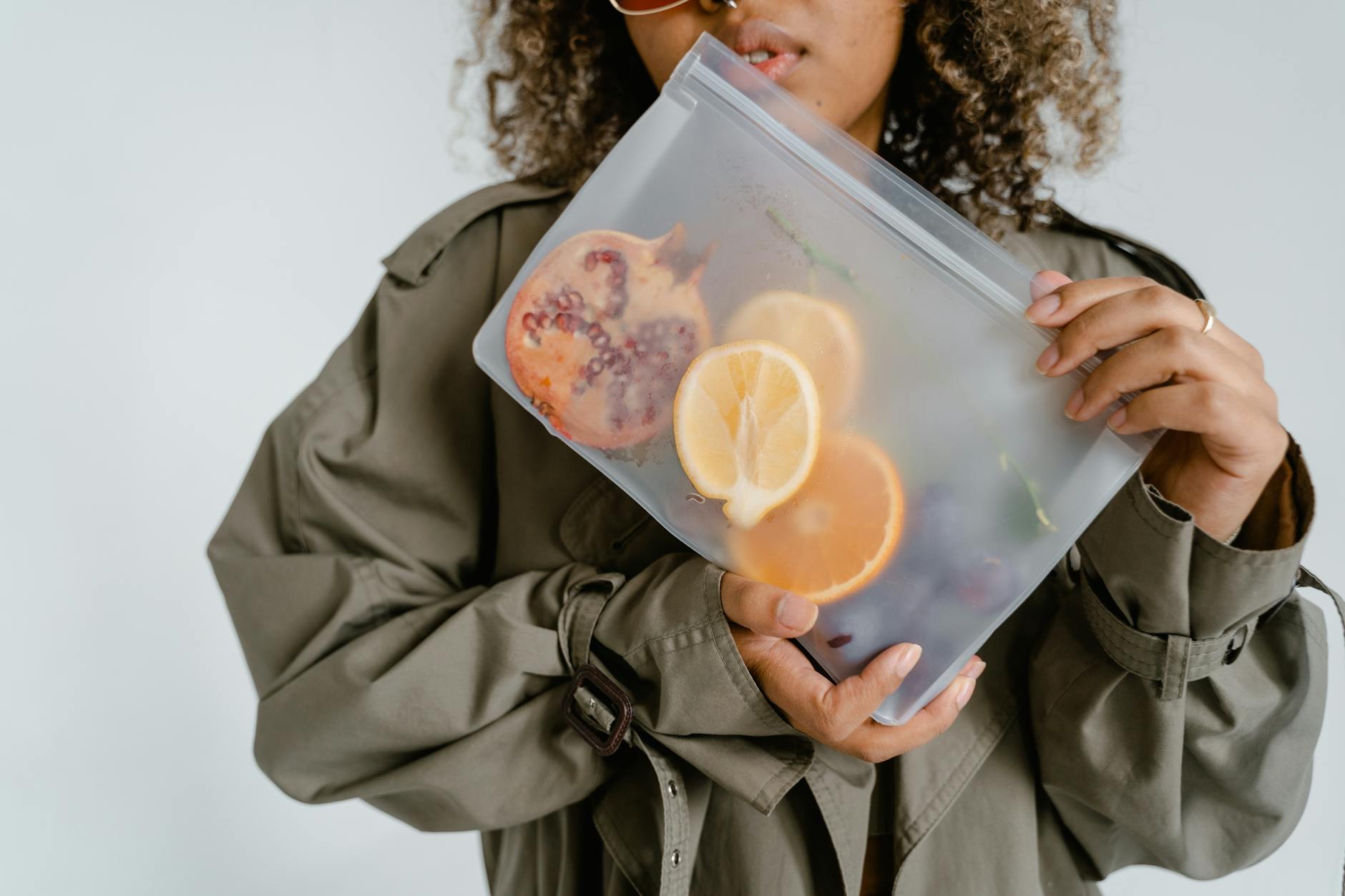
Open any kitchen drawer in America and you'll probably find them — a box of clear plastic bags with that satisfying yellow-and-blue seal. You use them for leftovers, sandwiches, marinating chicken, storing half a lemon, carrying snacks through airport security. They're so embedded in daily life that throwing one away without a second thought feels completely normal.
Which makes it genuinely surprising to learn that when the Ziploc bag was first introduced to the American public, the reaction was essentially: why would I need that?
A Zipper for Packaging
The origin of the zipper-seal bag doesn't begin in a kitchen. It begins in an industrial context, with a problem that had nothing to do with leftovers.
In the 1950s, a man named Borge Madsen, a Danish inventor, developed a concept for a plastic bag that could be sealed with a simple interlocking closure — a miniaturized version of the zipper principle applied to packaging. The idea was clean, reusable, and airtight. Madsen brought it to a company called Flexigrip, which held the early patents on the concept.
The technology was licensed to several companies, but it found its most consequential home when it came to the attention of Dow Chemical in the early 1960s. Dow was already a major player in consumer plastics — they manufactured Saran Wrap, the clingy plastic film that had become a postwar kitchen staple. The zipper-seal bag seemed like a natural extension.
But convincing the company to fully commit to a consumer version of the product required a particular kind of salesmanship. That job fell to a man named Robert Vergobbi, a Dow salesman who believed in the product when others were skeptical about whether ordinary Americans would pay for something they could approximate with a twist tie and a rubber band.
The World's Fair Gamble
Dow made its public debut with the product at the 1968 World's Fair — or more precisely, through early consumer market testing in the mid-1960s that culminated in a formal national launch. The bags were initially marketed not as kitchen tools but as sandwich bags, a rebranding of the humble lunch staple that had been around for decades.
The early reception was underwhelming. Consumers weren't immediately convinced they needed a resealable plastic bag. Wax paper worked fine for sandwiches. Aluminum foil handled leftovers. The refrigerator kept things cold. What exactly was the problem this thing was solving?
It's a pattern that shows up repeatedly in the history of consumer products: the most enduring innovations often solve problems people didn't know they had until someone handed them the solution. The zipper-seal bag needed Americans to experience using one before they could understand why they wanted it.
Dow pushed forward anyway, investing in marketing and gradually expanding the product line. By the early 1970s, the bags were being sold under the Ziploc brand name — a clean, descriptive coinage that did exactly what good product naming should do: tell you what the thing does in the time it takes to say it.
The Slow Revolution in the Refrigerator
What changed the trajectory of the Ziploc bag wasn't a single marketing campaign or a celebrity endorsement. It was utility, demonstrated over time.
As more Americans encountered the bags, the advantages became self-evident. Food stayed fresher longer. The seal was stronger and more reliable than plastic wrap, which had an infuriating tendency to cling to itself. The bags were transparent, so you could see what was inside without opening everything. They stacked. They traveled. You could squeeze the air out before sealing, which mattered for freshness in a way that felt almost scientific.
The product line expanded steadily through the 1970s and 80s. Sandwich bags were joined by storage bags in multiple sizes, freezer bags with heavier plastic walls, and eventually snack-size bags for portion control. Each new format found a new use case, and each use case found a new customer.
By the 1980s, Ziploc bags were a grocery list staple. By the 1990s, they had become so deeply embedded in American domestic life that they started appearing as a cultural shorthand — the lunch bag, the evidence bag in crime dramas, the travel toiletry bag that became mandatory under TSA rules after 2006. That last development — the 3-1-1 liquids rule requiring airport security to inspect a quart-sized clear bag — turned the Ziploc into a federally adjacent object. A Danish inventor's industrial packaging concept had become part of the architecture of air travel.
What the Bag Actually Changed
It would be easy to dismiss the Ziploc bag as a minor convenience — a nice product, sure, but hardly a cultural force. That undersells what it actually did.
Before resealable bags were common, food storage in American kitchens was a more labor-intensive process. Leftovers went into containers with lids. Things got wrapped and rewrapped. Portions were harder to manage. The zipper-seal bag introduced a new category: the disposable-but-reusable flexible container that required no washing, no lid-matching, and no particular technique to use.
That simplicity changed habits. Meal prep culture — the Sunday ritual of portioning out food for the week — became significantly easier with resealable bags. School lunches got simpler to assemble. Freezer storage became more accessible for people without a collection of matching Tupperware. The bags democratized food storage in a quiet but real way.
They also sparked an entire consumer packaging category. The success of Ziploc demonstrated that Americans would pay for the convenience of resealable, flexible packaging, which eventually led to resealable pouches on everything from shredded cheese to coffee to trail mix. The modern grocery store shelf, with its proliferation of zip-top packaging, owes a direct debt to the product that almost nobody wanted in 1968.
The Drawer That Started It All
Today, Americans use an estimated billions of plastic bags annually — a number large enough to prompt serious environmental conversations about single-use plastics and the waste they generate. Many consumers have shifted toward reusable silicone versions of the same basic concept. Some cities and states have moved toward restrictions on certain plastic bags.
The Ziploc bag's story, in other words, isn't finished. The product that took years to convince anyone they needed is now being reconsidered for a different reason — not because it isn't useful, but because it's almost too useful to stop using.
That's the full arc: from industrial concept to skeptical debut to kitchen drawer essential to environmental question mark. Borge Madsen's zipper principle, Dow Chemical's persistence, and one salesman's belief in a product nobody asked for — all of it living quietly in a box in your kitchen, waiting for the next leftover that needs a home.