How the Funeral Flower Crashed America's Prom Night
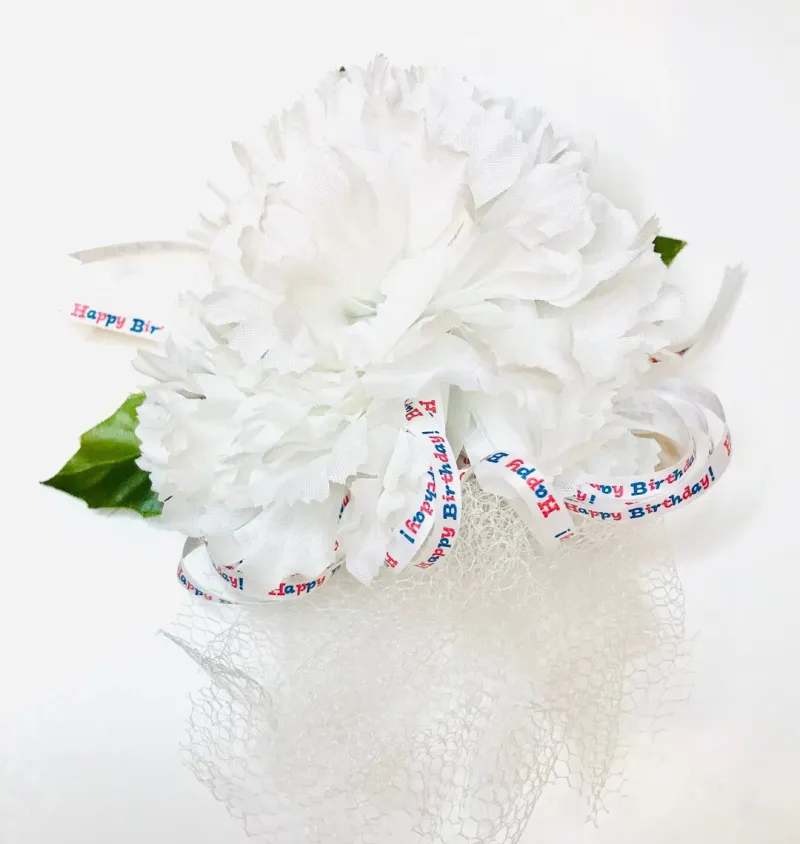
Photo: vintage carnation corsage prom 1950s bouquet flowers celebration, via i.etsystatic.com
How the Funeral Flower Crashed America's Prom Night
Somewhere in America right now, a teenager is pinning a carnation corsage to their date's dress before prom. Somewhere else, a graduate is being handed a bouquet of chrysanthemums by a beaming parent. And almost nobody in either scene has any idea that within living memory, both of those flowers were considered deeply, unmistakably associated with death.
The emotional identity of a flower seems like it should be ancient and fixed — something passed down through centuries of culture, immune to commercial meddling. But the story of how America's most common celebration flowers shed their funeral associations is not ancient at all. It's surprisingly recent, surprisingly deliberate, and surprisingly weird.
Flowers at the Graveside
Through most of the 19th century and into the early 20th, American mourning culture was elaborate and highly codified. Death was a public, ceremonial event, and flowers were central to its vocabulary. Chrysanthemums, in particular, were strongly tied to funerary practice — they bloomed in autumn, they lasted well, and they had been used at gravesites long enough that the association felt natural and permanent.
Carnations occupied similar territory. Cheap to grow, long-lasting, and available in bulk, they were the workhorses of funeral arrangements across the country. Florists stocked them heavily for exactly that market. If you walked into a flower shop in 1910 and bought carnations, the florist probably assumed you were attending a service.
This wasn't unique to America. In parts of Europe — France and Italy especially — white chrysanthemums remain exclusively associated with funerals to this day. The cultural coding was deep and seemingly stable.
So what changed?
The Florists Who Needed a New Customer
The first crack in the funeral-flower association came not from sentiment but from economics. By the 1910s and 1920s, the American floral industry was growing rapidly, and florists were starting to think commercially in ways their predecessors hadn't. Funeral arrangements were reliable business, but they were also seasonal and dependent on death — not exactly a scalable growth strategy.
The industry needed occasions. And conveniently, American consumer culture was busy inventing them.
Mother's Day had been officially designated a national holiday in 1914, and the floral industry moved quickly to claim it. Anna Jarvis, who founded the holiday, famously wanted people to give their mothers a single white carnation — her own mother's favorite flower. The florists took that suggestion and ran with it, scaling it into mass-market bouquets and aggressively marketing carnations as the flower of maternal love.
 Photo: Mother's Day, via www.rubytuesday.com
 Photo: Anna Jarvis, via cdn.britannica.com
It was a deliberate reassignment. The same flower that filled funeral parlors was now being sold as a symbol of warmth and gratitude. And it worked — in part because the marketing was so consistent, and in part because most Americans simply didn't stop to question it.
Department Stores and the Graduation Bouquet
The chrysanthemum's makeover came slightly later and through a different channel. As American high schools formalized the graduation ceremony in the 1920s and 1930s, department stores — not florists — played an outsized role in shaping the associated rituals. Stores that sold everything from corsages to class rings had a financial interest in building out the cultural scaffolding around graduation, and flowers were an easy, affordable add-on sale.
Chrysanthemums were practical: they photographed well, they came in school colors if you dyed them, and they were inexpensive enough to give in large bunches. Stores promoted them aggressively in graduation-season advertising, and the association began to build. Within a generation, the chrysanthemum had acquired a second identity — still used at funerals, yes, but now also present at celebrations, sporting events, and homecomings.
The dual identity coexisted awkwardly for a while. Older Americans remembered the flower's original context. Younger ones, raised on graduation bouquets and homecoming corsages, didn't make the connection at all.
Advertising and the Memory Hole
What finally severed the association, at least for most Americans, was sustained advertising pressure from the mid-20th century onward. As the cut-flower industry professionalized and consolidated, national campaigns increasingly positioned specific flowers as symbols of joy, romance, and celebration — with almost no acknowledgment of their previous identity.
This wasn't a conspiracy. It was simply good marketing doing what good marketing does: it told a story loudly enough and consistently enough that the old story faded. By the time the baby boom generation was buying flowers for their own children's graduations, the funeral connection had largely dropped out of the cultural memory.
The meaning of a flower, it turns out, is not inherent. It's a social agreement — and social agreements can be renegotiated by anyone with enough reach and enough repetition.
Borrowed Symbols, Unknown Origins
What makes this story genuinely strange is how thoroughly the transition was completed. Americans today who reach for carnations on Mother's Day or hand chrysanthemums to a graduate aren't making a conscious choice to ignore those flowers' history. They simply don't know it. The emotional rebranding was so effective that the original meaning has become, for most people, entirely invisible.
That invisibility is the real achievement. Florists and department stores didn't just change what flowers meant — they changed it so completely that it no longer feels like a change at all. It feels like tradition.
Which is, of course, exactly what a well-executed reinvention is supposed to feel like.
So the next time someone hands you a bouquet of white carnations and says congratulations, you can accept it with a smile. Just know that somewhere, about a hundred years ago, a florist decided those flowers needed a new job — and quietly gave them one.