The Graveyard Grass That Taught America to Obsess Over Perfect Lawns
The Death Business That Started a Living Obsession
In 1855, visitors to Mount Auburn Cemetery outside Boston witnessed something unprecedented in American landscape design: acres of perfectly manicured grass stretching between headstones like a vast green carpet. The effect was so striking that wealthy Bostonians began asking their gardeners a question that would reshape the entire nation: "Why can't our yards look like that?"
 Photo: Mount Auburn Cemetery, via i.ytimg.com
The irony was lost on them entirely. They were admiring a landscape designed specifically for the dead, maintained by full-time groundskeepers with unlimited budgets, and trying to recreate it around their homes where people actually lived.
The English Obsession That Crossed an Ocean
Mount Auburn's designers had borrowed heavily from English country estates, where massive lawns served a practical purpose: they provided clear sightlines around manor houses, making it impossible for enemies or poachers to approach unseen. In England, these lawns were maintained by teams of servants with specialized tools and endless hours.
American cemetery designers loved the aesthetic but missed the context entirely. They imported the look without the army of groundskeepers, the specific climate conditions, or the security concerns that had originally justified it. They just thought it looked impressive.
The result was beautiful but completely impractical for average homeowners. Maintaining cemetery-quality grass required constant attention, specialized knowledge, and significant expense — resources most Americans simply didn't have.
The Suburban Explosion That Changed Everything
For nearly a century, perfect lawns remained a luxury for the wealthy and the dead. Then came the 1950s housing boom, and everything changed overnight.
Postwar developers faced a unique challenge: they were building thousands of identical houses on former farmland, creating instant neighborhoods that looked sterile and temporary. The solution seemed obvious — surround each house with a small version of those impressive cemetery lawns. It would make the developments look established, valuable, and distinctly American.
What developers didn't anticipate was the maintenance nightmare they were creating. They were essentially giving millions of families a part-time job they'd never asked for, maintaining a type of landscape that required constant care to look "right."
The Machine Makers Who Saw an Opportunity
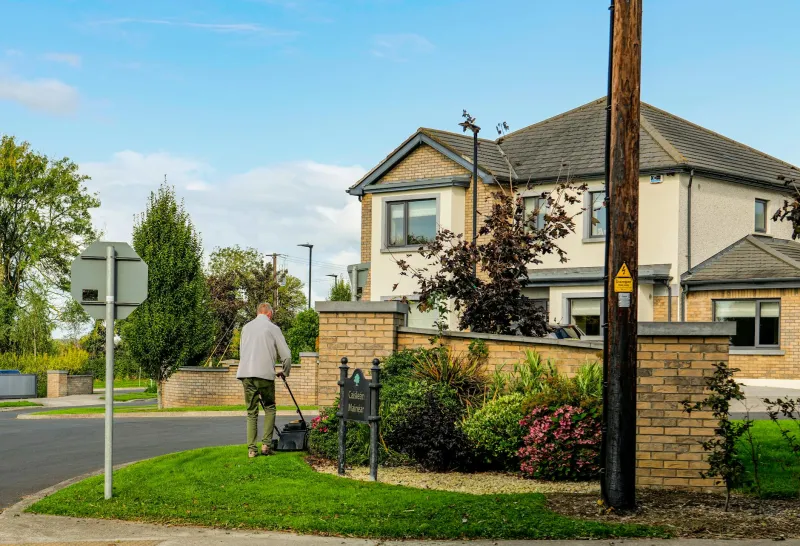
Lawn mower manufacturers watched this suburban explosion with barely contained excitement. Suddenly, millions of Americans owned property that supposedly required weekly cutting, but most had never operated anything more complex than a push mower designed for small city yards.
The marketing campaign that followed was brilliant in its simplicity: manufacturers convinced Americans that lawn care wasn't just maintenance, it was a reflection of personal character. A well-maintained lawn showed you were responsible, successful, and cared about your community. A neglected lawn suggested the opposite.
Advertisements from the era are almost comical in their intensity. One popular slogan declared: "Your lawn is your signature — make sure it's legible." Another warned: "Neighbors notice neglect."
The Social Pressure That Made It Permanent
By the 1960s, the perfect lawn had become a suburban arms race. Homeowners found themselves trapped in a cycle of constant comparison with their neighbors, each trying to maintain grass that looked like it belonged in a cemetery or country club.
The pressure was real and immediate. Homeowners' associations began writing lawn care requirements into their bylaws. Real estate agents started warning buyers that property values depended on neighborhood lawn quality. Insurance companies offered discounts for well-maintained properties.
What had started as an aesthetic choice became a social obligation, enforced not by law but by the subtle and not-so-subtle judgments of neighbors.
The Chemical Revolution That Sealed the Deal
The introduction of chemical fertilizers and pesticides in the 1970s turned lawn care from a weekend chore into a year-round obsession. Manufacturers promised that the right combination of chemicals could create grass so perfect it would be the envy of every cemetery in America.
The reality was more complicated. Chemical-dependent lawns required constant intervention — more fertilizer, more pesticides, more water, and more frequent cutting. Each solution created new problems that required additional products to solve.
Homeowners found themselves spending hundreds of dollars annually to maintain grass they couldn't actually use for anything except looking at.
The Ritual That Consumed a Nation
Today, Americans spend over $60 billion annually on lawn care, dedicating roughly 3 billion hours each year to mowing grass that serves no practical purpose beyond appearance. The average suburban homeowner spends more time maintaining their lawn than they do exercising, reading, or playing with their children.
The environmental cost is staggering: lawn irrigation accounts for nearly half of residential water usage in many states, while gas-powered mowers produce as much pollution in one hour as driving a car for 100 miles.
The Graveyard's Greatest Victory
The ultimate irony is that most Americans now consider lawn maintenance a natural, timeless tradition when it's actually a manufactured habit barely 70 years old. What began as cemetery design has become so deeply embedded in American culture that questioning it seems almost unpatriotic.
Those Victorian cemetery designers who wanted their grounds to look like English estates could never have imagined that their landscape choices would eventually convince an entire nation to spend their weekends recreating the perfectly manicured grass of the dead. They just wanted their cemeteries to look impressive. Instead, they accidentally taught America a new way to measure success, one perfectly mowed lawn at a time.