Before It Chilled Your Beer, It Was Keeping Bodies Cold
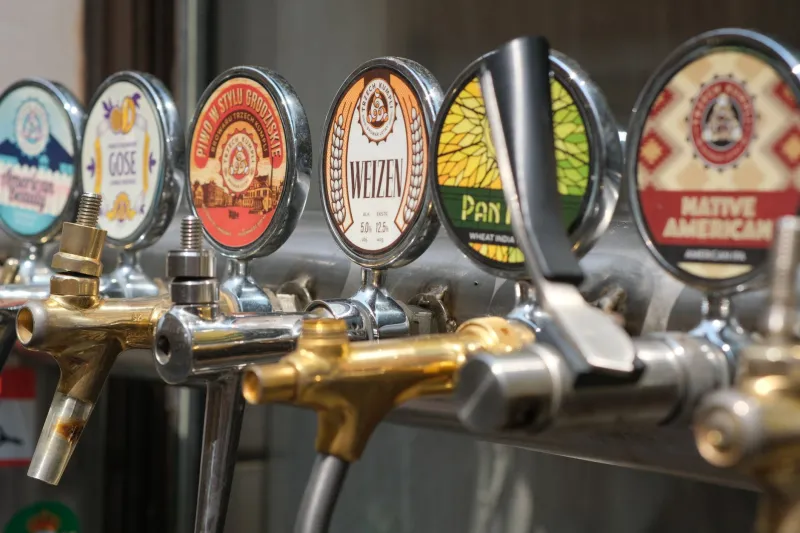
There's a moment in almost every American bar that nobody thinks twice about: the bartender pulls a cold glass from the freezer, holds it under a tap, and fills it with draft beer at exactly the temperature you expected. Cold. Reliably, predictably cold. It feels like the most natural thing in the world.
It isn't. Or at least, it wasn't — not for most of American history. For the better part of the 19th century, cold beer was a seasonal luxury, dependent on winter ice harvests and the expensive infrastructure required to store and transport it. The shift to reliable, mechanical cold didn't come from the brewing industry or from particularly demanding drinkers. It came, of all places, from the people responsible for the dead.
Trace it back far enough, and your Friday night beer has a surprisingly grim origin story.
The Ice Problem
Before mechanical refrigeration existed, keeping anything cold in America was genuinely complicated. The natural ice trade — cutting blocks from frozen lakes and rivers in winter, storing them in insulated ice houses, and shipping them across the country — was a massive industry by the mid-1800s. Frederic Tudor, the so-called Ice King, had built a commercial empire around it. But it was expensive, unreliable in warm climates, and entirely dependent on whether winter had cooperated.
 Photo: Frederic Tudor, via i0.wp.com
For breweries and saloons, this created a persistent headache. Lager beer — which had been gaining enormous popularity among German immigrant communities since the 1840s — required cold fermentation and cold storage to taste right. Ale could tolerate warmer conditions. Lager could not. As lager became America's dominant beer style in the decades following the Civil War, the cold problem became an industry-wide crisis.
Brewers in cities like Milwaukee, St. Louis, and Cincinnati were spending fortunes on natural ice, building elaborate underground cellars, and watching their product suffer through warm summers. They needed a better solution. They just didn't find it first.
The Undertakers Were Already There
Here's the part that tends to surprise people: while brewers were still hauling ice blocks, the funeral industry had already started experimenting with mechanical cooling.
The reasons were practical and, in their way, urgent. Embalming as a widespread American practice had grown out of the Civil War — it was how the Union Army transported fallen soldiers home for burial — but it was still imperfect and not universally adopted. For funeral homes handling bodies in warm weather, especially in the South, the window between death and burial was a genuine logistical problem. Bodies deteriorated quickly. Families needed time to gather. Something had to bridge the gap.
Early mechanical refrigeration systems — based on the compression and expansion of gases, a principle that inventors like Alexander Twining and Carl von Linde had been developing since the 1850s — were bulky, expensive, and temperamental. But they produced reliable cold without any dependence on seasonal ice. For a funeral parlor, that reliability was worth the investment.
 Photo: Carl von Linde, via vidasilustres.net
By the 1870s and 1880s, a number of American mortuaries had installed rudimentary mechanical cooling systems specifically to preserve bodies awaiting burial. The technology worked. It was just waiting for someone else to realize how broadly useful it was.
The Migration from Morgue to Saloon
The leap from funeral parlor to tavern wasn't a single eureka moment. It was gradual, driven by a combination of commercial pressure and technological improvement.
As mechanical refrigeration units became more refined through the 1880s, they also became smaller and more affordable. Entrepreneurs and engineers who had been watching the funeral industry's adoption of the technology began pitching modified versions to brewers and saloon owners. The argument was straightforward: the same principle that kept a body cold for a week could keep a keg cold indefinitely.
The brewing industry — particularly the large commercial operations in the Midwest — moved relatively quickly. Companies like Anheuser-Busch and Pabst invested in mechanical refrigeration for their production facilities, which allowed year-round lager brewing without dependence on natural ice. But it was the spread of the technology to individual saloons and bars that changed the drinking experience for ordinary Americans.
By the 1890s, mechanical refrigeration had begun appearing in bars across major American cities. Cold draft beer — genuinely, reliably cold, not just cool-ish from a rapidly melting ice block — became a selling point. Saloons that could advertise cold beer drew customers away from those that couldn't. The market did the rest.
How Cold Became a Standard, Not a Luxury
What's remarkable about this shift isn't just the technology — it's how completely it rewrote American expectations. Within a generation, cold beer stopped being a pleasant surprise and became a baseline requirement. Warm beer, which had been perfectly normal for centuries of European and early American drinking culture, became associated with failure. With a bad bar. With being cheated.
This is genuinely unusual in food and drink history. Most quality standards creep upward slowly and unevenly. The cold beer standard moved fast, and it moved uniformly. By the early 20th century, an American bar that couldn't serve cold beer wasn't really competitive. The expectation had calcified into something close to a cultural right.
Prohibition interrupted the trend but didn't reverse it. When legal beer returned in 1933, the mechanical refrigeration infrastructure was already mature, and the industry rebuilt around the cold standard immediately. Post-Prohibition America didn't rediscover cold beer — it picked up exactly where it had left off.
The Unlikely Chain of Custody
Today, the connection between the funeral industry's early refrigeration experiments and the cold beer in your hand is almost entirely invisible. There's no reason it would occur to anyone standing at a bar to think about 19th-century morticians solving a preservation problem.
But that's where the thread leads when you follow it. A technology developed to manage death became the technology that defined one of America's most enduring social rituals. The morgue and the saloon shared a solution before they shared anything else.
Somebody had to figure out reliable cold first. It just happened to be the undertakers.