How a Mouthwash Brand Convinced America That Breathing Was Embarrassing
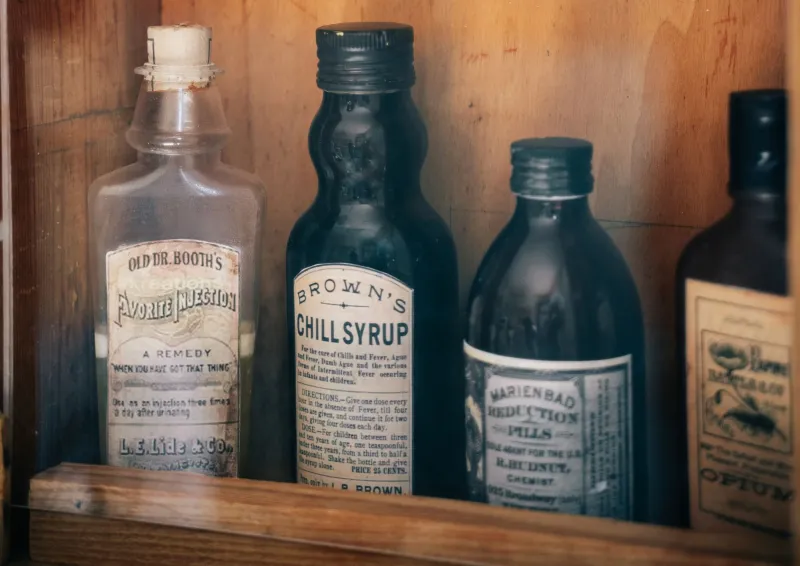
Somewhere in your bathroom cabinet, there's probably a bottle of mouthwash. You use it without much thought — maybe twice a day, maybe just before a job interview or a first date. It feels like basic hygiene. It feels like something you've always done.
But here's what's strange: the anxiety that sends you reaching for that bottle — the specific fear that your breath might be quietly ruining your social life — is not ancient. It's not even particularly old. It was, in large part, manufactured. Deliberately. By the company selling the cure.
A Surgical Antiseptic Looking for a Job
Listerine was invented in 1879 by Dr. Joseph Lawrence, a St. Louis chemist who formulated it as a surgical antiseptic. It was named after Joseph Lister, the British surgeon who pioneered the use of antiseptics in operating rooms. For its first few decades of existence, Listerine was marketed to doctors and dentists — a clinical product for clinical settings.
 Photo: St. Louis, via explorestlouis.com
 Photo: Joseph Lister, via c8.alamy.com
 Photo: Joseph Lawrence, via upload.wikimedia.org
It was also sold, at various points, as a floor cleaner and a treatment for gonorrhea. The product worked fine as an antiseptic. It just didn't have a mass market.
That changed in the 1920s, when the Lambert Pharmacal Company — which owned Listerine — handed the problem to its advertising team and essentially told them to find a reason for ordinary Americans to buy this stuff by the bottle.
The Word That Made It Work
The campaign they built was centered on a single, clinical-sounding word: halitosis.
The term wasn't new. It had appeared in medical literature since the late 19th century, derived from the Latin halitus (breath) and the Greek osis (condition). But it wasn't a word anyone used in conversation. It wasn't a household concern. Bad breath was something people noticed occasionally and mentioned politely, if at all.
Listerine's advertisers understood that giving something a clinical name makes it feel like a diagnosed condition — serious, medical, worth treating. They began running ads in the early 1920s that didn't just mention halitosis; they built entire emotional narratives around it.
The ads were, by modern standards, almost shockingly manipulative.
"Often a Bridesmaid, Never a Bride"
One of the most famous Listerine ads from 1925 told the story of a woman named Edna — perpetually a bridesmaid, never finding a husband, her social failure attributed entirely to halitosis. She had no idea. Her friends didn't tell her. She was suffering in invisible disgrace.
Other ads showed men passed over for promotions, couples drifting apart, friendships quietly dissolving — all because of breath that the sufferer couldn't detect in themselves. The tagline that appeared across many of these campaigns: "Even your best friends won't tell you."
It was a masterpiece of manufactured anxiety. The ads didn't just sell a product. They created a problem, defined it as a social catastrophe, established that you probably had it without knowing, and positioned Listerine as the only solution. All in a quarter-page newspaper spread.
Sales increased by roughly 7,000 percent between 1922 and 1929.
The Genius of the Invisible Threat
What made the campaign so effective — and so enduring — was its specific psychological architecture. The threat was invisible to the person who had it. You couldn't self-diagnose. You couldn't rely on feedback from the people around you, because polite society didn't discuss such things. The only protection was preemptive, daily use of the product.
This was a new kind of advertising. Before Listerine, most ads told you a product was good. Listerine's ads told you that you might be failing — socially, romantically, professionally — and that you didn't even know it. The product wasn't a luxury. It was social insurance.
The approach was so successful that it became a template. Soap companies began running similar campaigns about body odor. Deodorant brands followed. Dandruff shampoos. The whole category of "personal hygiene" products as a consumer market — the idea that ordinary human bodies require constant chemical maintenance to be socially acceptable — owes a significant debt to what Lambert Pharmacal built in the 1920s.
What the Science Actually Says
To be fair, chronic bad breath is a real condition for some people, often linked to gum disease, dry mouth, or digestive issues. Antibacterial mouthwash can help. The product isn't fraudulent.
But the specific fear that drove Listerine's rise — the idea that ordinary morning breath or the faint trace of garlic from lunch represents a moral failing and a social liability — was constructed. Deliberately. By people who needed to sell something.
The American Dental Association didn't even endorse Listerine's claims until decades after the ads began running. The clinical authority the brand projected was largely borrowed from the word halitosis itself.
We're Still Living in Their Ad
Today, the US mouthwash market is worth over four billion dollars annually. Americans rinse, gargle, and spit with a regularity that would have baffled their grandparents' grandparents. The bathroom cabinet has become a small pharmacy of odor-management products, each one tracing its market rationale back, in some way, to the idea that the human body — left to its own devices — is faintly unacceptable.
Trace it back far enough, and you find a company in the 1920s that needed to move units of surgical antiseptic. They borrowed a Latin word, wrote a story about a lonely bridesmaid, and convinced an entire country that breathing was something to be ashamed of.
It worked better than anyone could have imagined. It still does.