Nobody Wanted It Hot — So One Desperate Vendor Poured It Over Ice and Changed America Forever
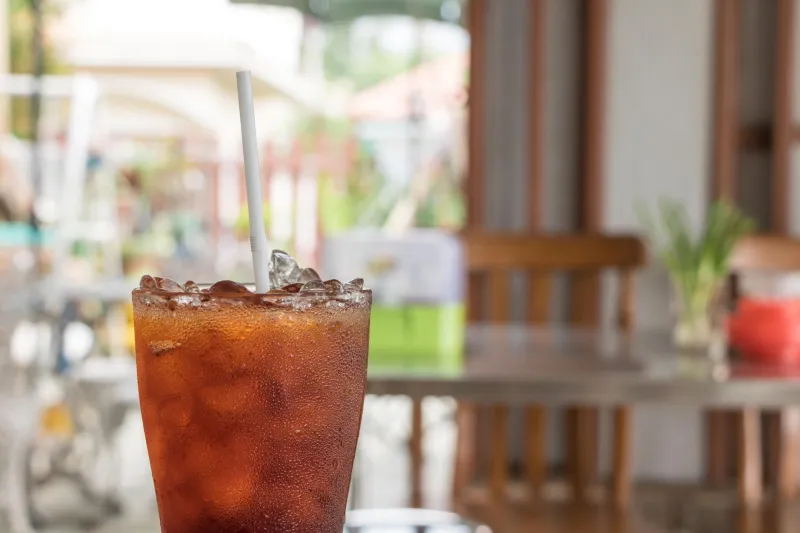
Picture this: It's the summer of 1904. The Louisiana Purchase Exposition — better known as the St. Louis World's Fair — is packed with tens of thousands of visitors sweating through one of the hottest summers on record. You're Richard Blechynden, a tea merchant from India, and you've set up a booth to introduce Americans to fine hot tea. Nobody is stopping. Nobody cares. It's 100 degrees, and you're handing out steaming cups of a drink that feels like punishment.
 Photo: Richard Blechynden, via m.media-amazon.com
 Photo: Louisiana Purchase Exposition, via 3.bp.blogspot.com
So you do the only logical thing. You dump a load of ice into it and start giving that away instead.
Within hours, your booth is the most popular spot at the fair.
That moment — accidental, sweaty, and slightly desperate — is widely credited as the birth of iced tea as an American institution. And while the full history is a little more complicated than that single afternoon, the story of how America became a nation of cold-tea drinkers is every bit as surprising.
Before the Ice, There Was the Empire
Tea itself had been part of American life long before Blechynden showed up in St. Louis. The British colonies ran on the stuff, which is part of why the Boston Tea Party hit so hard — taxing tea wasn't just a political move, it was an attack on daily life.
 Photo: Boston Tea Party, via www.havefunwithhistory.com
But hot tea in America always had a complicated relationship with the climate. In the South especially, summer heat made a steaming beverage feel less like comfort and more like a challenge. By the mid-1800s, cold tea drinks were already appearing in American cookbooks and punch recipes. Some historians point to an 1839 recipe from a Georgia plantation cookbook as one of the earliest recorded versions of something resembling iced tea. So the idea wasn't completely new.
What Blechynden did wasn't invent iced tea from scratch. He popularized it at exactly the right moment, in front of exactly the right crowd, at a cultural event that was shaping American taste in real time.
The Fair That Built American Appetite
The 1904 World's Fair wasn't just a tourist attraction — it was a showcase for the future of American food and consumer culture. Hot dogs, ice cream cones, and cotton candy all have documented connections to that same fair. It was a place where novelty was the whole point, and where vendors competed furiously for the attention of a massive, curious crowd.
In that context, Blechynden's pivot to iced tea was less a genius insight and more a survival instinct. He needed foot traffic. Ice was available — it was a luxury, but fairs had it. And the crowd was desperately looking for something cold.
The result was a line around the booth and a drink that visitors took home as a memory of the fair. That kind of cultural exposure — millions of people, one shared experience — is hard to replicate. The World's Fair essentially gave iced tea a national launch party.
How the South Made It Sacred
After 1904, iced tea spread quickly across the country, but it was the American South that truly adopted it as a way of life. By the mid-20th century, sweet tea — iced tea brewed strong and mixed with sugar while hot, then chilled — had become so embedded in Southern culture that refusing a glass at someone's home was practically a social offense.
The reasons are partly practical. The South's long, brutal summers made cold beverages a necessity. Tea was cheap, easy to brew in large batches, and could be sweetened to taste. Restaurants started keeping pitchers on tables as a default. Diners stopped asking if you wanted it — they just poured.
This is where iced tea diverged sharply from its global cousins. In the UK, tea is hot, full stop. In Japan, bottled cold tea exists but it's typically unsweetened and mild. In most of the world, the idea of drinking tea cold by default would seem strange. But in America — and especially in the South — asking for "tea" without specifying cold is the unusual move.
The Industrial Leap: From Pitchers to Powder
Like most beloved American foods, iced tea eventually got industrialized. By the 1950s and 60s, instant iced tea mixes hit the market, letting families skip the brewing entirely. Lipton's powdered iced tea became a pantry staple in millions of homes. Then came bottled versions — Snapple in the 1980s, Arizona Iced Tea in the early 90s — which turned iced tea into a grab-and-go product available at every gas station and corner store in the country.
The Arizona Iced Tea story is its own chapter. Launched in 1992 with oversized 24-ounce cans priced at 99 cents, it deliberately positioned itself as the everyman's drink — cheap, generous, and unpretentious. It became a cultural symbol almost immediately, showing up in hip-hop lyrics and convenience store coolers from Brooklyn to Los Angeles.
Today, Americans consume more than 3.8 billion gallons of tea per year, and roughly 85 percent of it is served cold. That number puts the US among the largest tea-consuming nations on earth, which is remarkable given that the country's founding act of political rebellion literally involved throwing the stuff into a harbor.
What It Actually Means
The story of iced tea is a story about how American culture transforms things. A British colonial habit became a Southern tradition. A World's Fair improvisation became a national default. A hot beverage got flipped upside down and poured over ice until it became something entirely new.
Richard Blechynden almost certainly didn't know he was doing anything historic that summer afternoon in St. Louis. He was just trying to move product in a heat wave. But that's how a lot of American food culture got built — not through grand vision, but through someone sweating through a problem and finding the simplest possible solution.
Next time you order an iced tea without even thinking about it, that's the moment you're repeating. A desperate vendor, a sweltering crowd, and a bucket of ice that changed everything.