How a Scientist's Seaweed Soup Sparked a Century of American Panic
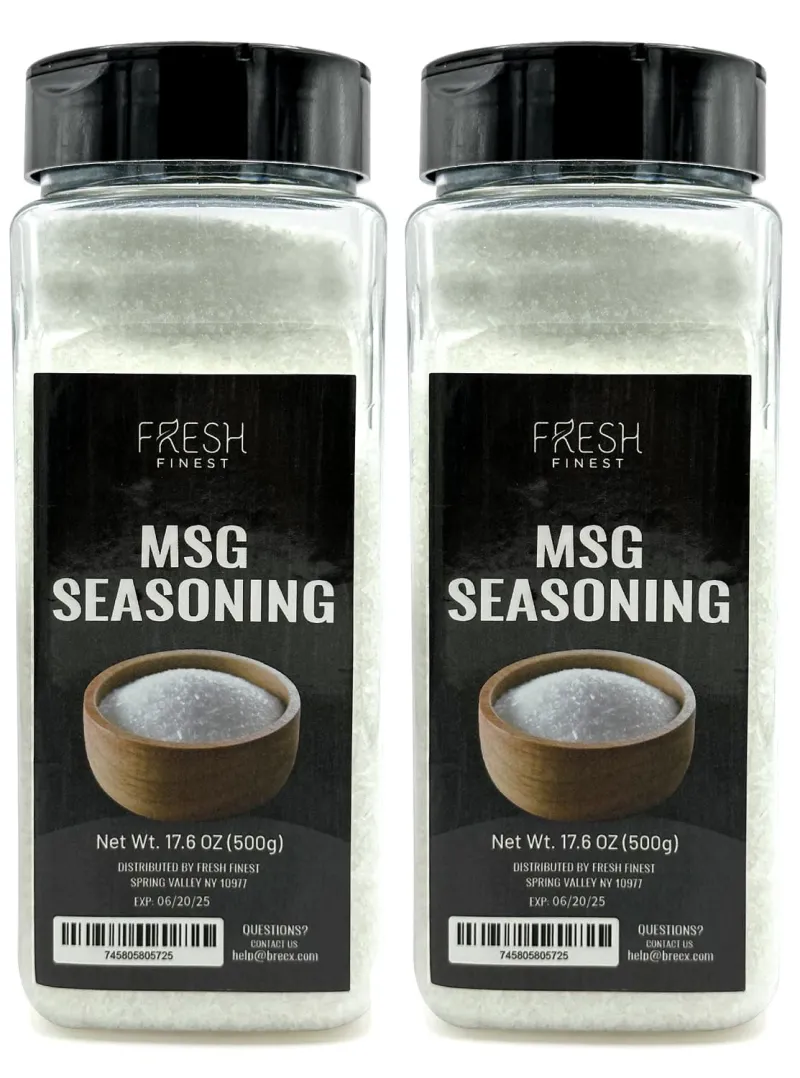
Photo: MSG seasoning bottle kitchen spice Asian cooking ingredient, via i5.walmartimages.com
There's a decent chance you've eaten MSG today. It's in your Doritos, your fast food seasoning, your canned soups, and roughly a thousand other things sitting quietly in your pantry right now. And for most of the twentieth century, nobody thought twice about it. Then, in 1968, one doctor wrote a letter to a medical journal — not a study, a letter — and an entire ingredient got canceled for fifty years.
The story of monosodium glutamate is one of the strangest journeys in American food history. It starts with a bowl of seaweed soup in Tokyo, takes a hard turn through postwar industrialization, and ends up in the middle of one of the most revealing cultural panics the US food world has ever seen.
The Taste That Didn't Have a Name
In 1908, a Japanese chemist named Kikunae Ikeda sat down to eat a bowl of dashi — a traditional Japanese broth made from kombu seaweed — and noticed something he couldn't explain. The soup had a depth of flavor that didn't fit into any of the four categories scientists had been using for centuries: sweet, sour, salty, bitter. It was savory in a way that felt almost electric. Rich. Mouth-filling.
Ikeda spent the next year isolating the compound responsible. He identified it as glutamic acid — an amino acid that occurs naturally in aged cheeses, ripe tomatoes, fermented soy sauce, and yes, seaweed. He stabilized it into a salt form: monosodium glutamate. He called the flavor umami, which translates roughly as "pleasant savory taste." Then he patented it and licensed it to a Japanese company called Ajinomoto, which means "essence of taste."
By the 1930s, MSG was a staple across East Asian kitchens. By the 1950s, American food manufacturers had caught on. The US military had actually started adding it to rations after noticing that Japanese and Korean military food tasted noticeably better. Campbell's, Heinz, and dozens of other brands quietly folded it into their formulas. Nobody put it on the label. Nobody needed to. It was just flavor.
The Letter That Changed Everything
On April 4, 1968, a physician named Dr. Robert Ho Man Kwok wrote a short letter to the New England Journal of Medicine. He described experiencing a strange collection of symptoms — numbness at the back of his neck, general weakness, heart palpitations — after eating at Chinese restaurants. He speculated, with no clinical evidence, that MSG might be the cause. He called it "Chinese Restaurant Syndrome."
The journal published it. The press picked it up. And something about the framing — mysterious symptoms, foreign food, a vaguely alarming name — hit a cultural nerve.
Within months, newspapers across the country were running alarming headlines. Readers began self-reporting symptoms. Restaurants started advertising "No MSG" as a selling point. The ingredient that had been sitting in American kitchens for decades without incident was suddenly a public health threat — despite the fact that Dr. Kwok's letter contained zero controlled data and was, by definition, anecdote.
Fear With a Cultural Address
Here's the part food historians keep coming back to: MSG wasn't just in Chinese food. It was everywhere. Fritos. McDonald's. Lipton soup packets. KFC's original recipe. But "Chinese Restaurant Syndrome" didn't prompt anyone to stop eating potato chips.
The timing matters. This was the late 1960s, a period of significant anti-Asian sentiment in the United States — not far removed from Japanese internment and the anxieties of the Korean War, and right in the middle of the Vietnam conflict. Chinese immigration was surging in major cities. Chinese restaurants were one of the most visible points of cultural contact between white Americans and Asian communities. The fear didn't land on Doritos because Doritos didn't carry the same cultural freight.
Subsequent scientific studies failed, repeatedly, to reproduce Chinese Restaurant Syndrome under controlled conditions. Double-blind trials in which participants were given MSG without knowing it showed no consistent pattern of symptoms. The FDA reviewed the ingredient and classified it as "generally recognized as safe." The American College of Allergy, Asthma, and Immunology couldn't confirm a reliable link between MSG and adverse reactions in the broader population.
None of it really mattered. The story had already stuck.
The Quiet Comeback
For decades, "No MSG Added" was a marketing badge of honor — a signal of purity and trustworthiness. Then, sometime around the mid-2010s, the narrative started to shift.
Food writers began pointing out the double standard. Scientists started getting louder about the lack of evidence. A new generation of chefs — many of them Asian American — started talking openly about the racism embedded in the MSG panic and reclaiming the ingredient publicly. Brands like Momofuku and Fly By Jing started putting MSG front and center on their packaging, almost as a statement.
In 2020, the writer Ian Lecklitner published a widely shared piece calling MSG's rehabilitation "long overdue." The New York Times ran a recipe column celebrating it. Millennials started buying little bottles of Ajinomoto at Asian grocery stores and sprinkling it on everything from scrambled eggs to popcorn.
The ingredient hadn't changed. The culture had.
What It Actually Tells Us
MSG's century-long American saga is a case study in how a scientific-sounding name attached to a cultural anxiety can override evidence almost indefinitely. The "syndrome" was never real in any reproducible clinical sense. The panic was real. And the gap between those two things — between what the science said and what the public believed — was filled almost entirely by bias.
Ikeda's discovery is still one of the most significant contributions to flavor science in modern history. Umami is now a fully recognized fifth taste, taught in culinary schools and studied in neuroscience labs. MSG itself is chemically identical to the glutamate your body produces naturally and the glutamate in a wedge of Parmesan.
The seaweed soup was never the problem. We just needed someone to trace it back far enough to find that out.