Your Left Pocket Isn't an Accident — It's a 300-Year-Old Tailor's Decision
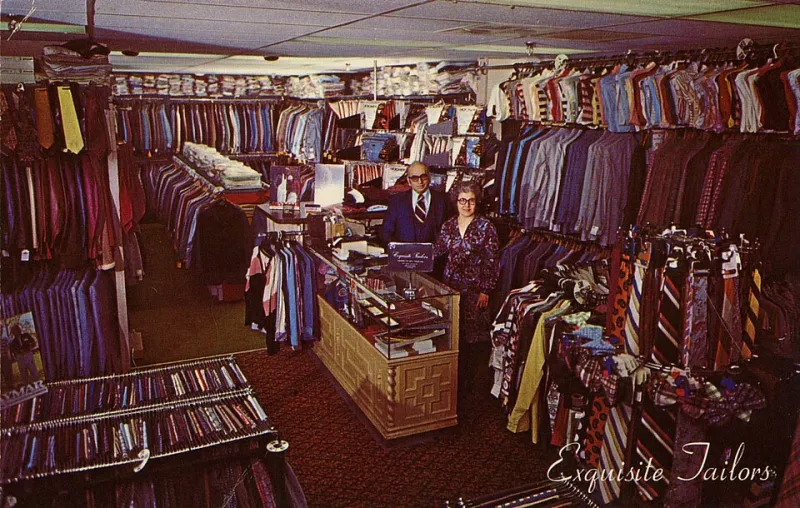
Photo: Steve Shook from Moscow, Idaho, USA, CC BY 2.0, via Wikimedia Commons
Pull your phone out right now. Which hand grabbed it? Which pocket was it in?
For most people — especially right-handed ones — the answer is the left pocket, retrieved with the right hand. It feels completely natural. Automatic. Like breathing. But here's the thing: nobody sat you down and taught you that. You just... do it. And so does almost everyone around you.
That reflex didn't come from Apple's product designers. It didn't come from some ergonomics study. It came from a set of tailoring conventions that were already old when the United States was founded — and those conventions, it turns out, were built around the logistics of not accidentally stabbing yourself.
Swords, Scabbards, and the Logic of the Left
In 18th-century Europe, a well-dressed gentleman didn't just wear a coat. He wore a sword. And the mechanics of carrying a sword — specifically, drawing it quickly without disemboweling yourself in the process — had a direct influence on how tailors structured the entire left side of a man's jacket.
Most men were right-handed. A sword worn on the left hip could be drawn across the body with the right hand in one clean motion. That placement became standard. And once the sword was fixed on the left side, everything else on the body had to work around it.
Tailors began designing left-side pockets to be shallower and more accessible — not because they were more convenient in the abstract, but because the right hand needed quick, unobstructed access to that side of the body. The left side of a coat became the "active" side. The right side was where you stored things you didn't need in a hurry.
When swords eventually stopped being a standard accessory (a development that took longer than you'd think — dueling culture persisted in parts of Europe well into the 19th century), the pocket placement stayed. The tailoring logic outlived the weapon that created it.
The Pocket as a Social Document
Here's where it gets more interesting. Pockets in clothing weren't always a given. For most of Western fashion history, women's clothing had no functional pockets at all. Women carried small fabric pouches — called, straightforwardly, "pockets" — that were tied around the waist underneath their skirts and accessed through slits in the fabric. These weren't built into garments. They were accessories.
Men's tailoring, by contrast, developed integrated pockets early, largely because men's clothing was designed for movement, utility, and — yes — combat readiness. The gendered gap in pocket functionality is something fashion historians have written about extensively, and it's a gap that persists in a frustrating way even today. Women's jeans pockets are famously, almost comically, shallow. That's not a manufacturing oversight. It's a direct descendant of centuries of fashion logic that said women's clothing didn't need to carry things.
The left-pocket convention, then, is really a men's tailoring convention that became so dominant it shaped how we all — regardless of gender — relate to our clothing and our objects.
When the Phone Moved In
Fast-forward to the early 2000s. The mobile phone goes from briefcase accessory to pocket essential in roughly a decade. And where does it land? The left pocket. Not because anyone decided that was the right place. But because the pocket on the left side of a pair of jeans or a jacket is — thanks to those 18th-century tailors — just slightly more accessible to the dominant right hand.
There's also a cardiac mythology that gets attached to this. You'll hear people say they keep their phone on the left because it's "closer to the heart" — which sounds meaningful but is basically post-hoc rationalization. The real reason is structural. The left front pocket of a standard pair of American jeans sits at an angle that makes it easy to reach across your body with your right hand and pull something out cleanly. That angle was designed in. It wasn't an accident.
Some researchers have studied phone-carrying habits and found that left-pocket placement is genuinely dominant among right-handed people — not universal, but strongly preferred. And when people are asked why, almost nobody says "because of historical sword-carrying conventions," which is, objectively, the correct answer.
Why Switching Feels Wrong
Try an experiment. Move your phone to your right pocket for a full day. Most people find this genuinely disorienting — not just inconvenient, but slightly wrong in a way that's hard to articulate. That's because the habit is so deeply grooved that it's become a kind of muscle memory, and muscle memory that's been reinforced by the physical design of your clothes.
The left-front pocket on most jeans and trousers is cut slightly differently from the right. It's not dramatically different, but there's often a subtle variation in depth and angle that makes it the more natural receptacle for something you're going to reach for constantly throughout the day. Denim manufacturers didn't invent that asymmetry. They inherited it from a tailoring tradition that inherited it from a sword-carrying tradition.
There's something quietly remarkable about that chain. A 17th-century French tailor making a coat for a nobleman who needed fast access to his blade set in motion a series of design decisions that would, three centuries later, determine which pocket a person in Ohio reaches into when their phone buzzes.
The Invisible Architecture of Habit
This is what makes the left-pocket story worth tracing. It's not just about clothing. It's about how deeply embedded historical decisions become invisible infrastructure — the kind of thing you interact with dozens of times a day without ever questioning why it works the way it does.
The sword is gone. The nobleman is gone. The tailor is long gone. But the logic they created is still there, stitched into the side of your jeans, shaping a reflex you'd swear was just common sense.
It wasn't common sense. It was somebody else's practical solution to a completely different problem — and it followed you all the way into the 21st century without ever introducing itself.