The Operating Room Problem That Convinced Americans They Stank
The Surgeon's Sweaty Palm Problem
In 1888, a young surgeon in Philadelphia had a problem that was literally slipping through his fingers. Dr. Abraham Verley's hands would sweat profusely during operations, making it difficult to maintain a steady grip on his instruments. This wasn't just uncomfortable — it was dangerous. In an era before modern surgical gloves, a surgeon's steady hands could mean the difference between life and death for patients.
 Photo: Dr. Abraham Verley, via upload.wikimedia.org
Dr. Verley experimented with various solutions, eventually developing an aluminum-based compound that effectively blocked perspiration. He called his creation "Odorono," short for "odor? Oh no!" The product worked brilliantly for its intended purpose, keeping his hands dry and steady throughout even the longest procedures.
What Dr. Verley created was revolutionary, but he had no idea he'd just invented something that would fundamentally change how Americans thought about their bodies. At the time, most people bathed once a week, and body odor was considered as natural and inevitable as breathing. The concept of daily deodorant use was as foreign as daily teeth brushing — which, coincidentally, most Americans didn't do either.
When Nobody Wanted to Stop Sweating
Dr. Verley tried to market Odorono to the general public, but Americans showed virtually no interest. The product was expensive, somewhat irritating to the skin, and solved what most people didn't consider a problem. Personal hygiene standards were dramatically different in the late 1800s. Regular bathing was seen as potentially unhealthy, and many doctors believed that blocking natural bodily functions like sweating could be dangerous.
The few customers who did try Odorono often complained about the product's side effects. The aluminum compounds could stain clothing and cause skin irritation. Women, who were the primary target market, found that the product sometimes ruined their expensive dresses. For most Americans, the cure seemed worse than the supposed disease.
Dr. Verley's daughter, Edna Murphey, inherited the struggling business in 1912. Sales were dismal, and the family was considering abandoning the product entirely. But Edna had a different vision for Odorono — one that would require completely changing how Americans thought about their bodies.
 Photo: Edna Murphey, via afflictor.com
The Funeral Parlor Playbook
Edna Murphey understood that she wasn't really selling deodorant; she was selling anxiety. But how do you make people worried about something they'd never considered a problem? She found her answer in an unlikely place: the funeral industry.
Funeral parlors in the early 1900s had mastered the art of manufacturing social anxiety around death and mourning. They convinced grieving families that elaborate ceremonies and expensive caskets were necessary to properly honor the deceased. Their advertising didn't focus on the products themselves, but on the social consequences of not buying them — the shame, embarrassment, and judgment that would follow.
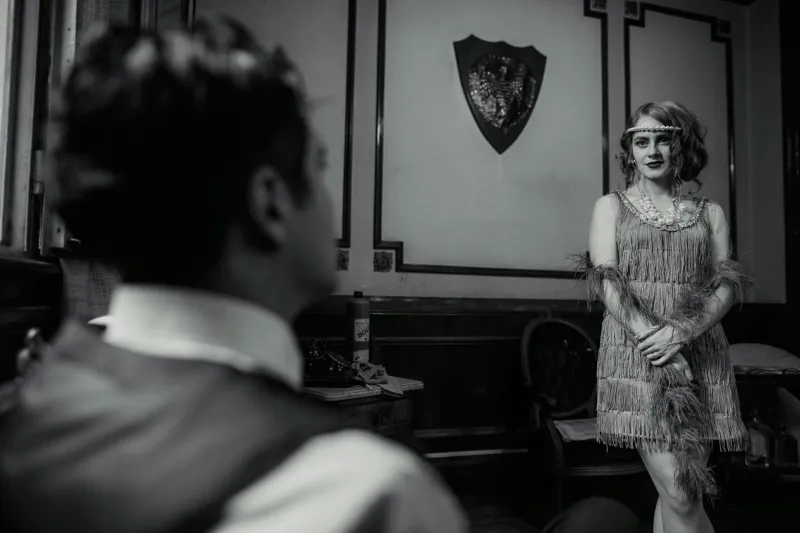
Murphey adapted these psychological tactics for personal hygiene. Instead of advertising Odorono's benefits, she focused on the horrifying social consequences of body odor. Her breakthrough campaign featured a well-dressed woman at a social gathering with the headline: "Within the curve of a woman's arm." The ad suggested that women were unknowingly destroying their social lives and romantic prospects through an offensive problem they couldn't even detect themselves.
Manufacturing a Crisis
The genius of Murphey's approach was creating a problem that was simultaneously invisible and ubiquitous. Body odor, she suggested, was something others noticed but were too polite to mention. Women could be sabotaging their careers, friendships, and romantic relationships without ever knowing why people seemed to avoid them.
Her ads featured scenarios that struck at women's deepest social fears: being passed over for promotions, having suitors lose interest, or being excluded from social circles. The messaging was clear — you might think you're clean and presentable, but unless you use Odorono, you're probably offending everyone around you.
This wasn't just advertising; it was social engineering. Murphey was attempting to rewire fundamental cultural norms around cleanliness and social acceptability. The campaign suggested that natural body functions were not just unpleasant, but socially unacceptable in modern American society.
The Anxiety That Built an Empire
The psychological manipulation worked brilliantly. Women began purchasing Odorono not because they felt they needed it, but because they feared the consequences of not using it. Sales skyrocketed as the product transformed from an unnecessary luxury to a social necessity.
Murphey's success inspired competitors to enter the market with similar products and equally anxiety-driven advertising campaigns. By the 1920s, multiple deodorant brands were competing to convince Americans that body odor was a serious social problem requiring daily attention.
The messaging evolved and expanded. Advertisers began targeting men with campaigns suggesting that professional success depended on odor control. They created new categories of social anxiety around "feminine hygiene" and "close contact confidence." What started as a solution to a surgeon's sweaty palms became a multi-million-dollar industry built on manufactured insecurity.
When Marketing Rewrites Culture
By the 1930s, daily deodorant use had become standard practice for most middle-class Americans. A generation grew up believing that body odor was inherently shameful and that preventing it required constant vigilance and commercial products. The cultural shift was so complete that most people forgot there had ever been a time when deodorant wasn't considered essential.
The transformation wasn't just about hygiene — it was about redefining what it meant to be a respectable member of society. Murphey's campaigns had successfully convinced Americans that their natural bodies were fundamentally flawed and required technological intervention to be socially acceptable.
Today, the global deodorant and antiperspirant industry generates over $70 billion annually. Americans spend more on underarm products than many countries spend on their entire healthcare systems. All because a surgeon needed steadier hands and his daughter understood that fear sells better than facts.
The next time you automatically reach for deodorant each morning, remember that this "essential" daily ritual is less than a century old. One of America's most automatic hygiene habits isn't based on medical necessity or ancient wisdom — it's the lasting legacy of a brilliantly manipulative advertising campaign that convinced an entire nation they had a problem they never knew existed.