The Housewife's Kitchen Hack That Hijacked America's Morning
The Problem That Started It All
In 1908, Melitta Bentz was fed up. Every morning in her Dresden kitchen, she faced the same annoying ritual: brewing coffee that inevitably came with a mouthful of bitter grounds. The standard method involved boiling coffee grounds directly in water, then straining the mixture through cloth or metal filters that let too much sediment through.
 Photo: Melitta Bentz, via static.vecteezy.com
Bentz wasn't a scientist or an inventor. She was a housewife with three young children who simply wanted a clean cup of coffee without the gritty aftermath. So she did what countless frustrated people do — she improvised with whatever was lying around.
The Blotting Paper Breakthrough
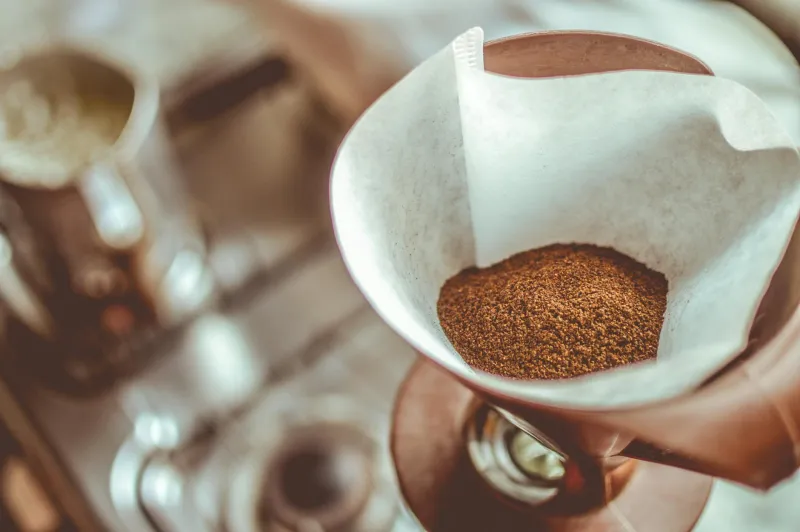
On a particularly aggravating morning, Bentz grabbed a piece of blotting paper from her son's school notebook and a brass pot she'd punctured with holes. She placed the paper inside the pot, added coffee grounds on top, and poured hot water over the whole setup.
The result was revolutionary: clean, smooth coffee without a single ground in sight.
What Bentz had accidentally created was the first paper coffee filter — a concept so simple that it seems obvious in hindsight, yet so effective that it would eventually transform how an entire continent consumed caffeine.
From Kitchen Table to Patent Office
Bentz knew she was onto something. On June 20, 1908, she filed for a patent with the Imperial Patent Office in Berlin. The application was straightforward: "Filter paper for coffee preparation." Patent number 173,948 was granted, making Bentz one of the few women patent holders of her era.
But here's where the story gets interesting. When Bentz approached established coffee companies with her invention, they weren't interested. The coffee industry was perfectly content with existing brewing methods. Why fix what wasn't broken?
So Bentz did what many rejected inventors do — she started her own company. With 73 pfennigs (about 50 cents) in startup capital, she and her husband Hugo launched Melitta, named after her first name.
The Atlantic Crossing That Changed Everything
For decades, Bentz's invention remained primarily a European phenomenon. American coffee culture in the early 1900s was dominated by percolators and stovetop brewing methods. The idea of paper filters seemed unnecessary to a nation that had grown accustomed to stronger, more bitter coffee.
World War II changed everything. American soldiers stationed in Europe encountered drip coffee and brought a taste for it home. Suddenly, there was demand for a brewing method that produced cleaner, less bitter coffee.
American manufacturers took notice. Companies like Chemex and later Mr. Coffee didn't just copy Bentz's filter idea — they redesigned the entire brewing process around it. The automatic drip coffee maker, introduced widely in the 1970s, turned Bentz's manual process into a set-it-and-forget-it morning routine.
The Quiet Revolution in American Kitchens
By the 1980s, something remarkable had happened. The coffee brewing method that German coffee companies had initially rejected became so embedded in American culture that most people assumed it had always existed. The automatic drip coffee maker became as essential to American kitchens as the refrigerator.
The numbers tell the story: by 1990, over 80% of American households owned an automatic drip coffee maker. The morning ritual of measuring grounds, adding water, and pressing a button became as automatic as brushing teeth.
The Billion-Dollar Morning Habit
What Bentz started with school blotting paper eventually became a multi-billion dollar industry. Americans now consume over 400 million cups of coffee daily, with the vast majority brewed using some variation of her original filter concept.
The irony isn't lost: an invention rejected by the coffee establishment became the foundation of American coffee culture. Every morning, millions of Americans participate in a ritual that traces back to a frustrated housewife who just wanted a clean cup of coffee.
Why It Stuck
Bentz's invention succeeded because it solved a universal problem with an elegantly simple solution. But its dominance in America specifically came down to timing and cultural fit. Americans embraced convenience and automation in ways that other cultures didn't, making the automatic drip coffee maker a perfect match for the fast-paced American lifestyle.
Today, even as espresso machines and single-serve pods compete for counter space, the basic principle Bentz discovered in her Dresden kitchen remains unchanged. Hot water, coffee grounds, and a filter — the same three elements that frustrated a German housewife over a century ago and accidentally gave America its morning ritual.