Thomas Jefferson's Pasta Obsession Didn't Go Anywhere — Until the Great Depression Finished the Job
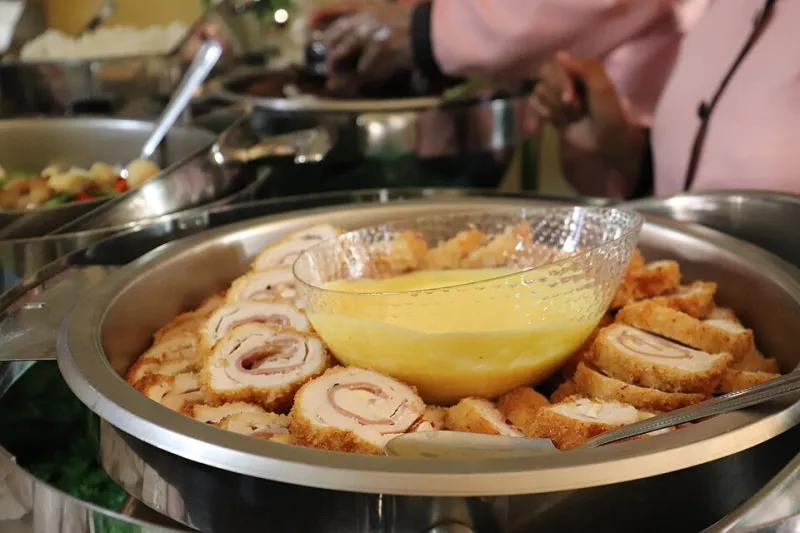
Photo: ShmilyDigital, CC BY-SA 4.0, via Wikimedia Commons
Thomas Jefferson's Pasta Obsession Didn't Go Anywhere — Until the Great Depression Finished the Job
Thomas Jefferson was a man of expensive tastes. He spent years in France as American minister and came back with a long list of European enthusiasms: fine wine, architectural ideas, a particular fondness for pasta. He reportedly brought a pasta-making machine back from Naples, sketched his own design for macaroni noodles, and served a version of macaroni baked with cheese at White House dinners.
 Photo: Thomas Jefferson, via socialstudieshelp.com
The dish he was so proud of would eventually become the thing every broke college student eats at midnight. That transformation took about 150 years, a world war, a global economic collapse, and one very clever cardboard box.
The Founding Father's Noodle Phase
Jefferson encountered pasta seriously during his time in Europe in the 1780s. At the time, macaroni — a broad term then covering various pasta shapes — was considered an elegant, cosmopolitan ingredient associated with Italian cuisine and European sophistication. Bringing it back to America wasn't just a culinary preference; it was a statement about taste and worldliness.
There are records suggesting Jefferson served a macaroni dish at a White House dinner in 1802, layered with cheese and baked — something close to what we'd recognize today. His household records include notes on cheese and pasta together, and a recipe attributed to his era describes a dish made with macaroni, butter, and Parmesan.
But this was not a dish for ordinary Americans. Imported pasta was expensive. Aged cheese was expensive. The labor to prepare it was part of the point. Macaroni and cheese in the early 19th century was aspirational food — the kind of thing that signaled you had access to imported ingredients and a kitchen staff capable of preparing them.
For most of the 1800s, it stayed that way.
How the Recipe Drifted Downward
By the late 19th century, pasta manufacturing had taken root in the United States, particularly among Italian immigrant communities in cities like New York and Philadelphia. As domestic production made pasta cheaper, it slowly moved from import-only luxury to accessible pantry ingredient.
American cookbooks began including macaroni recipes more frequently. The cheese component evolved too — rather than expensive Parmesan, American cooks started using local cheddar, which was more widely available and far cheaper. The dish began to appear in home economics textbooks and community cookbooks as a practical, filling meal.
Still, it hadn't made the leap to mass culture. That required a catastrophe.
The Depression Changed the Math
When the stock market collapsed in 1929 and the Great Depression settled over the country, American families needed food that was cheap, filling, and could stretch across multiple meals. Meat became a luxury. Fresh vegetables were seasonal and often scarce. Shelf-stable, calorie-dense food wasn't just convenient — it was survival.
Enter James Lewis Kraft, a Canadian-born cheese entrepreneur who had already revolutionized American dairy by figuring out how to process and package cheese for long shelf life. Kraft's company had been selling processed cheese since the early 1900s, and by the 1930s, they were looking for ways to expand their market in a country where nobody had money to spend.
 Photo: James Lewis Kraft, via 4.bp.blogspot.com
In 1937, Kraft introduced the Kraft Dinner — a small cardboard box containing dried macaroni and a packet of processed cheese powder. The whole thing cost 19 cents and made enough food to feed a family of four. At a time when a pound of ground beef cost about 13 cents and required cooking time, skill, and refrigeration, a box of Kraft Dinner was an extraordinary value proposition.
The product sold eight million boxes in its first year.
Wartime Put It in Every Pantry
If the Depression introduced Kraft Dinner to American families, World War II made it indispensable. When meat and dairy were rationed starting in the early 1940s, the government issued ration stamps that covered cheese and meat but not processed cheese powder — which meant Kraft Dinner could be purchased without burning precious ration points.
Housewives could buy two boxes of Kraft Dinner for a single ration stamp. The product was effectively government-adjacent comfort food, available when almost nothing else was. Families who had never eaten it before the war came to rely on it. Children who grew up eating it during the war carried that association into adulthood.
This is how comfort food works. It's rarely about the taste alone — it's about the emotional context in which you first ate it. For an entire generation of Americans, macaroni and cheese from a box was the smell of their childhood kitchen during the hardest years of the 20th century.
From Pantry Staple to Cultural Institution
By the postwar era, boxed macaroni and cheese had achieved something remarkable: it had fully detached from its origins as a luxury dish and become a symbol of accessible, unpretentious American eating. The Jefferson connection — the White House dinner parties, the Italian pasta machine, the Parmesan cheese — was entirely forgotten.
Kraft Macaroni & Cheese became the best-selling packaged food in the United States. Competitors followed — store brands, organic versions, shapes licensed from cartoon characters. The basic formula stayed the same: dried pasta, powdered cheese, boiling water, butter or milk, five minutes of effort.
Today, Americans purchase roughly a million boxes of Kraft Mac & Cheese every single day. The dish that Jefferson served to impress European diplomats is now most commonly eaten from a pot on a Tuesday night when nobody feels like cooking.
The Long Arc of a Dish
What macaroni and cheese traces — from colonial luxury to Depression necessity to cultural touchstone — is really the story of how America processes hard times. The country has a long habit of taking something refined, stripping it down to its essentials, making it cheap enough for everyone, and then loving it so completely that the original version becomes almost unrecognizable.
Jefferson probably would have had opinions about Kraft Dinner. They probably wouldn't have been polite ones. But there's something fitting about the fact that a dish he imported from Europe to impress his dinner guests eventually became the thing that fed a nation through its worst decades.
Every box of mac and cheese is, in its own strange way, a presidential legacy.