The Rubber Revolution Nobody Asked For — How a Sticky Mess Became America's Shoe of Choice
The Man Who Couldn't Stop Experimenting
In 1839, Charles Goodyear was flat broke, living in debtor's prison, and obsessed with a substance that had ruined countless investors: rubber. The problem wasn't that rubber didn't work — it was that it worked too well in summer (turning into sticky goo) and not at all in winter (cracking like old leather). Most sane businessmen had given up on it entirely.
 Photo: Charles Goodyear, via static.sayidaty.net
Goodyear wasn't most businessmen. He was a failed hardware store owner with a dangerous habit of mixing chemicals in his kitchen. On a frigid February day, he accidentally dropped a mixture of rubber and sulfur onto his hot stove. Instead of melting into his usual sticky disaster, something extraordinary happened: the rubber stayed flexible but strong. He'd stumbled onto vulcanization, though he didn't know what to call it yet.
From Laboratory Accident to Tennis Court Fashion
For decades, vulcanized rubber remained a curiosity. It made decent boots and industrial gaskets, but nobody thought to put it on the bottom of regular shoes. That changed in the 1860s when wealthy Americans discovered tennis.
The sport demanded something traditional leather soles couldn't provide: grip on grass courts without damaging the perfectly manicured lawns of private clubs. Enter the canvas tennis shoe with rubber soles — marketed exclusively to country club members who could afford both the shoes and the membership fees to places that required them.
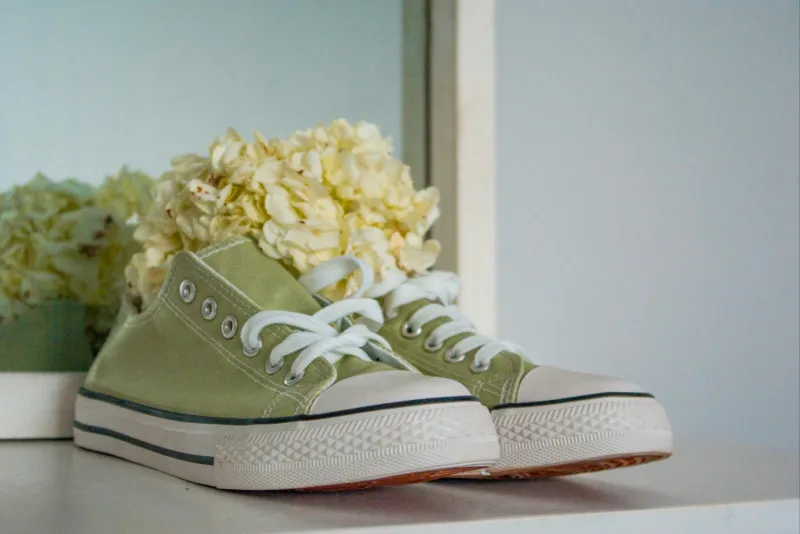
These early "sneakers" got their name from their silent soles, which allowed wearers to sneak around without the telltale click of leather on pavement. But they came with strict social rules: wearing them anywhere except a tennis court or gymnasium was considered improper, almost scandalous.
The Military Connection That Changed Everything
World War I turned everything upside down. The military needed lightweight, durable footwear for training exercises, and rubber-soled canvas shoes fit the bill perfectly. Suddenly, major manufacturers like Keds and Converse were producing sneakers by the thousands for soldiers who'd never set foot on a tennis court.
 Photo: World War I, via t4.ftcdn.net
When those soldiers returned home, they brought their sneakers with them. But even then, most Americans considered them strictly athletic wear — something you'd put on for a quick game of basketball, then immediately swap back for "real" shoes.
The Postwar Boom That Broke All the Rules
The 1950s suburban explosion created an unexpected problem: millions of new homeowners found themselves with driveways to wash, lawns to mow, and weekend projects that demanded comfortable, practical footwear. Sneakers, previously confined to sports, suddenly made perfect sense for weekend chores.
Teenagers noticed this shift first. In an era when adults insisted on formal dress codes, sneakers represented a small rebellion — comfortable, casual, and slightly inappropriate. Stars like James Dean wore them in movies, not for sports scenes but as everyday footwear, sending a clear message that old rules were changing.
 Photo: James Dean, via images3.alphacoders.com
The Cultural Revolution on Rubber Soles
By the 1960s, the sneaker had evolved from athletic equipment to cultural statement. The civil rights movement, counterculture, and youth rebellion all found expression through casual dress, and sneakers were the perfect symbol: democratic, comfortable, and completely at odds with the formal dress codes of the establishment.
Manufacturers caught on quickly. Instead of marketing sneakers just for sports, they began selling lifestyle. Converse All Stars became the shoe of rock musicians and artists. Adidas courted track stars whose success on television made their three stripes instantly recognizable.
The Billion-Dollar Accident
What nobody planned was how completely sneakers would take over American footwear. By the 1980s, athletic shoe companies were spending millions on celebrity endorsements, creating entire marketing campaigns around basketball players and runners who made sneakers seem not just acceptable but aspirational.
The transformation was complete: shoes that had once been banned from restaurants and offices were now fashion statements, collectibles, and cultural artifacts. Americans began buying multiple pairs not for different sports, but for different moods, outfits, and social situations.
The Rubber-Soled Nation
Today, the average American owns seven pairs of sneakers, and the athletic footwear industry generates over $95 billion annually. What started as Charles Goodyear's kitchen accident has become so deeply embedded in American culture that wearing sneakers to work, dinner, or even some weddings is perfectly acceptable.
The irony is impossible to miss: the most American of footwear began as a solution to a problem most Americans didn't have (tennis court etiquette), gained popularity through military necessity, and conquered the culture entirely by accident. Goodyear, who died poor despite his revolutionary discovery, could never have imagined that his sticky experiments would eventually put rubber soles on a nation.