The Sound Nobody Wanted — Until America Couldn't Live Without It
The Pitch That Nobody Heard
In 1951, a Bell Labs engineer named Robert Lucky walked into a boardroom with what he thought was a brilliant idea: telephone systems should give users constant audio feedback to confirm their connection was active. The room full of executives listened politely, then promptly rejected his proposal.
 Photo: Bell Labs, via freekidcoloring.com
Too expensive, they said. Too complicated. Customers would find it annoying.
Lucky's idea disappeared into the corporate filing cabinet, forgotten like thousands of other dismissed patents. But sometimes the best ideas have to wait for the world to catch up.
When Silence Became a Problem
By the late 1950s, American telephone networks were exploding in complexity. Long-distance calls bounced through multiple switching stations, creating dead air gaps that left callers wondering if their connection had dropped. Customer complaints flooded in — people hung up thinking their calls had failed, only to get busy signals when they tried to redial.
The solution came from an unlikely source: a junior technician who remembered Lucky's old proposal buried in the patent files. What if that "annoying" continuous tone could actually solve their biggest customer service headache?
The Accidental Symphony
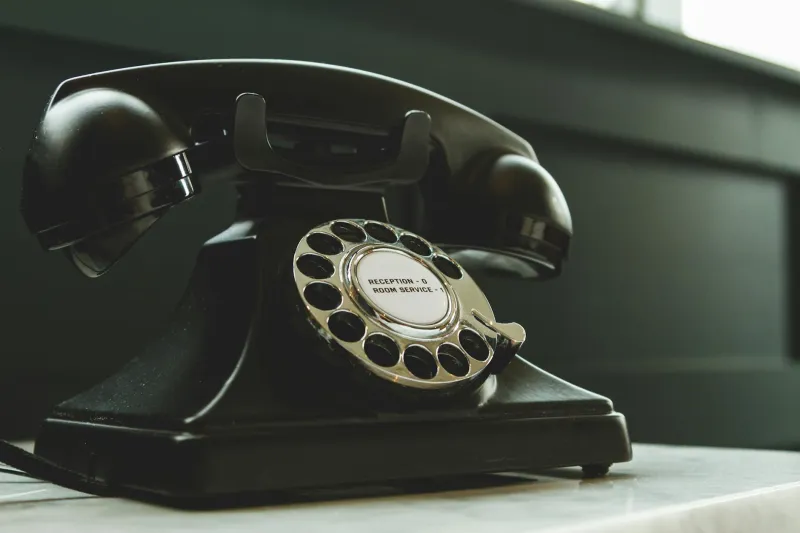
The first dial tone wasn't designed to be pleasant — it was designed to be functional. Engineers chose a combination of 350 Hz and 440 Hz frequencies because they were unlikely to interfere with existing switching equipment. The tone had to be loud enough to hear clearly but not so piercing that it hurt customers' ears during long waits.
Nobody expected Americans to develop an emotional relationship with this mechanical hum.
How America Learned to Listen
Within a decade, the dial tone had become more than just a technical signal — it was the sound of possibility. Kids in the 1960s would pick up the phone just to hear it, reassured by its steady presence. The tone meant the outside world was just seven digits away.
Businesspeople learned to interpret its subtle variations. A slightly weaker tone might indicate network congestion. A tone that cut out too quickly could signal equipment problems. Americans became unconscious experts at reading the emotional state of the telephone network through this single, continuous sound.
The Digital Revolution's Soundtrack
When dial-up internet arrived in the 1990s, that familiar tone took on new meaning. The sequence of dial tone, touch-tone dialing, and modem handshake became the ritual soundtrack of going online. Millions of Americans could identify their internet connection's health just by listening to those first few seconds of electronic negotiation.
The dial tone had evolved from a simple "ready" signal into America's first digital heartbeat.
The Silence We Never Noticed
Today's smartphones connect instantly, without ceremony. There's no audio confirmation, no reassuring hum to indicate readiness. Generation Z has grown up without ever hearing a dial tone, missing out on that small moment of anticipation between picking up the phone and making contact with the world.
Yet the dial tone's influence lingers in unexpected places. Video conferencing apps still use audio cues to signal connection status. Gaming platforms employ similar continuous tones to indicate server connectivity. Even smart home devices borrow the dial tone's language of steady audio feedback to communicate their operational state.
The Sound of Connection
Robert Lucky's rejected patent accidentally gave America something more valuable than efficient telephone operation — it gave us a shared audio language for understanding connection itself. For nearly half a century, that simple two-tone hum was how Americans knew they weren't alone, that the vast network was ready to carry their voices anywhere in the world.
In a country built on communication across impossible distances, the dial tone became our most democratic sound. Rich or poor, everyone heard the same reassuring hum when they picked up the phone. It was the audio equivalent of a green light, the sound of "yes, you can reach out."
The next time you hear a dial tone — perhaps on an office landline or in an old movie — you're listening to one of America's most successful accidental inventions. A sound nobody wanted that taught an entire nation what it means to be connected.